
Express History: Tracing 5,000 Years of Tangier in 48 Hours
| Key Points | Details to Remember |
|---|---|
| 🕰️ Covered Period | About 5,000 years of history, from ancient occupations to contemporary changes at the Tanger Med port and the waterfront. |
| 📍 Format | Chronological itinerary over 48 hours, designed to follow the city in the order of time rather than by simple geographic proximity. |
| 🚶 Pace | Day 1 on foot in the medina and kasbah; day 2 between the international city, the corniche, and the opening onto the strait. |
| 💸 Indicative Budget | Between 150 and 350 MAD per day excluding accommodation if you combine walking, small taxis, and a few museum tickets. |
| 📏 Distances | 3 to 5 km of walking per half-day in the old center, with some relief in the kasbah and cobbled alleys. |
| 🌤️ Best Period | Spring and autumn: clear light, temperatures often between 18 and 26 °C, and more comfortable crowds. |
Tangier is poorly understood if visited as just a simple weekend port city. Here, every ascent, every rampart, every square tells a different story: an ancient trading post, an Islamic city, an imperial border, an international zone, then a Moroccan metropolis oriented towards the Atlantic and the Mediterranean. In 48 hours, it is nevertheless possible to encompass this depth in a coherent route, provided you follow the city in the order of its history. This is precisely the goal of this chronological itinerary: to see the essential places, connect the eras, and avoid a puzzle-like visit.
🧭 The most effective guiding thread to visit Tangier is chronological: start with the kasbah and the ancient layers, then descend towards the medina, the historic port, the international city, and finally the contemporary waterfront.
⏱️ In practice, allow for 2 full days, with about 7 to 10 km of cumulative walking. The first day focuses on the oldest centuries; the second sheds light on the 19th-20th centuries and today’s city.
💰 For a flexible route, generally budget 20 to 40 MAD per trip by small urban taxi and site tickets often ranging, depending on the places and season, between 20 and 70 MAD.
🌊 Tangier’s interest also comes from its position: opposite the Strait of Gibraltar, about 14 km from Cape Spartel from the center, the city tells as much about the movement of empires as about that of travelers.
Table des matières
How to Trace 5,000 Years of Tangier in Just 48 Hours?
The simplest is to split Tangier into two parts: day 1 for the origins, the kasbah, and the medina, then day 2 for the diplomatic, cosmopolitan, and contemporary period. This pace follows the historical logic of the city while limiting back-and-forth in a very hilly center.
Many visitors start with the corniche or literary cafés. It’s pleasant, but not very clear if you want to understand the long term. It’s better to start at the top, where the city concentrates its oldest layers. The kasbah, situated on a promontory, allows you to immediately grasp the founding geography of Tangier: control of the strait, observation of the bay, and the permanent link between defense, trade, and maritime traffic.
In practice, this itinerary works well for a first stay. On the ground, it is observed that visitors who try to “see everything” in one day often mix periods and come away with a fuzzy impression. Conversely, following the chronology helps to understand why Tangier has changed its face several times without ever losing its essential function: being a threshold between African, Mediterranean, and European worlds.
To prepare this route, keep three landmarks in mind. First, the topography: the old town constantly goes up and down. Next, the actual visiting time: a museum or a kasbah quickly takes more than an hour when you read the places instead of just photographing them. Finally, the weather and the light: in Tangier, views of the strait are often better in the morning or late afternoon, especially outside of summer.
Day 1: from ancient origins to the Islamic city, through the kasbah and the medina
The first day should start early, ideally around 8:30 or 9 am, with the kasbah. This is where the long human settlement is best read. The site alone does not summarize the 5,000 years of Tangier, but it allows us to outline it: ancient presence, successive fortifications, political power, strategic role, and continuity of occupation. The Kasbah Museum, housed in the former palace of Dar el-Makhzen, is particularly useful for linking remains and historical narrative. Depending on the seasons and exhibitions, you often need to plan 1 to 1.5 hours for a truly attentive visit.
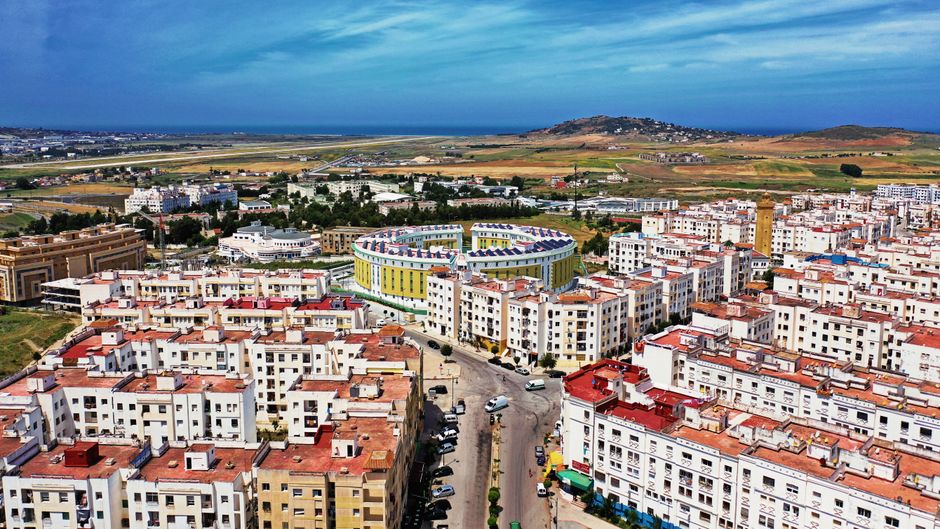
In this upper part, take the time to look at the ramparts and gates, not just the museum rooms. Tangier experienced Phoenician, Carthaginian, Roman, then Islamic influences; these layers are not always read like in an open-air archaeological site, but they structure the very location of the city. The ancient story of Tingis, often associated with the myths of Hercules and the proximity of the Hercules Caves, recalls how early Tangier was integrated into Mediterranean circulations.
To place this depth in a broader context, the documentation from UNESCO on Moroccan heritage and the resources of the Moroccan Ministry of Youth, Culture and Communication are good reference points. They help to understand that Tangier, even when it is not classified like other Moroccan medinas, is part of a major heritage and historical network at the national level.
Late morning: descend into the medina to read the Islamic city
After the kasbah, slowly descend towards the medina. This is the moment when history stops being only strategic and becomes urban and social. The narrow alleys, souks, neighborhood mosques, houses organized around patios tell the story of the Islamic city and its internal logics: protection against the wind, management of shade, pedestrian circulation, relative separation between commercial and residential spaces. Allow about 1.5 to 2 hours for an attentive stroll, without trying to cover every dead end.
In practice, the inhabitants of Tangier know very well that the medina is not a frozen set. People live there, work there, and still repair facades and doors. This is an important point for historical reading: the old town is not a fossilized fragment, but a living fabric. What regular travelers confirm is that you have to accept this daily density to understand the place, instead of seeking a pure “oriental postcard.”
It is observed on site that the kasbah of Tangier is better visited in the morning, when the alleys are quieter and the views of the bay are clearer. Around midday, the light becomes harsher and the reading of urban reliefs loses subtlety.
Afternoon: Grand Socco, Petit Socco and the old port
In the afternoon, continue with the thresholds between the old town and modernity. The Grand Socco and the Petit Socco are not just photogenic squares; they are hinge spaces. One passes from a closed, defensive, and interior city to a city open to diplomatic, commercial, and colonial flows. This transition is crucial to prepare for the second day, dedicated to the international era. On foot, the route between the kasbah, the Petit Socco, and the surroundings of the historic port covers about 3 to 4 km with stops.
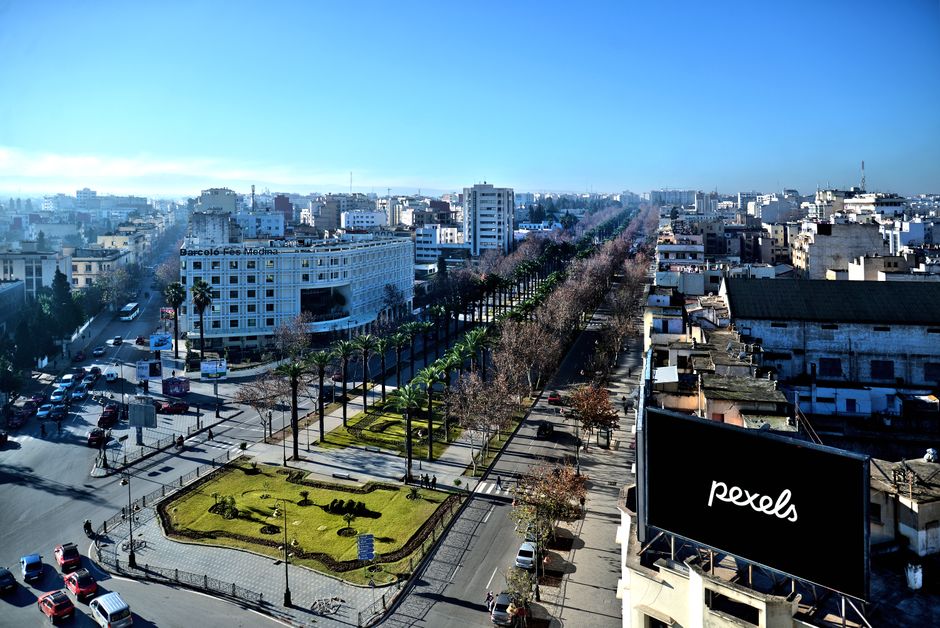
In Tangier, history is not organized by monuments. It passes from a terrace to a city gate, from a market to a diplomatic facade. This is also why a chronological itinerary sheds more light on the city than a simple checklist of addresses.
What to see to understand the international Tangier of the 19th and 20th centuries?
To grasp international Tangier, you need to connect the port, the medina squares, the old administrative districts, and the literary cafés. Between the late 19th century and 1956, the city became a diplomatic, commercial, and cultural laboratory where consuls, writers, merchants, and exiles intersected.
The second day ideally begins in the neighborhoods that reflect Tangier’s shift toward a unique status. The city was not only cosmopolitan in a vague sense; it was a space of ongoing negotiation between powers, private interests, merchant networks, and local authorities. This history culminates with the international zone, established in the 20th century, and ends with Tangier’s return to full Moroccan sovereignty in 1956.
For the traveler, this era is read less in a single grand monument than in a constellation of places: administrative buildings, historic hotels, European facades, promenades, cafés, and viewpoints. The area around boulevard Pasteur, place de France, and the streets descending toward the waterfront offers a very telling glimpse of this transformation. Allow about 2 to 3 hours to walk, observe, and take breaks in this more open, more diplomatic city, almost theatrical at times.
A detour to the waterfront allows one to gauge the change in scale. Where the old port mainly concentrated regional and Mediterranean trade, today’s Tangier engages with much larger infrastructures. The development of the Tanger Med complex, located about 40 km east of the city center, is not a visit stop in the historic core but a fundamental landmark for understanding the new economy of the strait. The official resources of Tanger Med and the Moroccan National Tourist Office provide a useful framework for placing the city in its recent dynamics.
Day 2 afternoon: Cape Spartel and the Hercules Caves, between myth, geography, and modern tourism
If you still have half a day, finish the itinerary outside the center, toward Cape Spartel and the Hercules Caves. This is not a folkloric aside: it is the best way to close the historical loop. Here, the city becomes landscape again, strait, maritime orientation. From the center of Tangier, count generally 20 to 30 minutes by taxi to reach the area, about 14 km depending on your starting point.
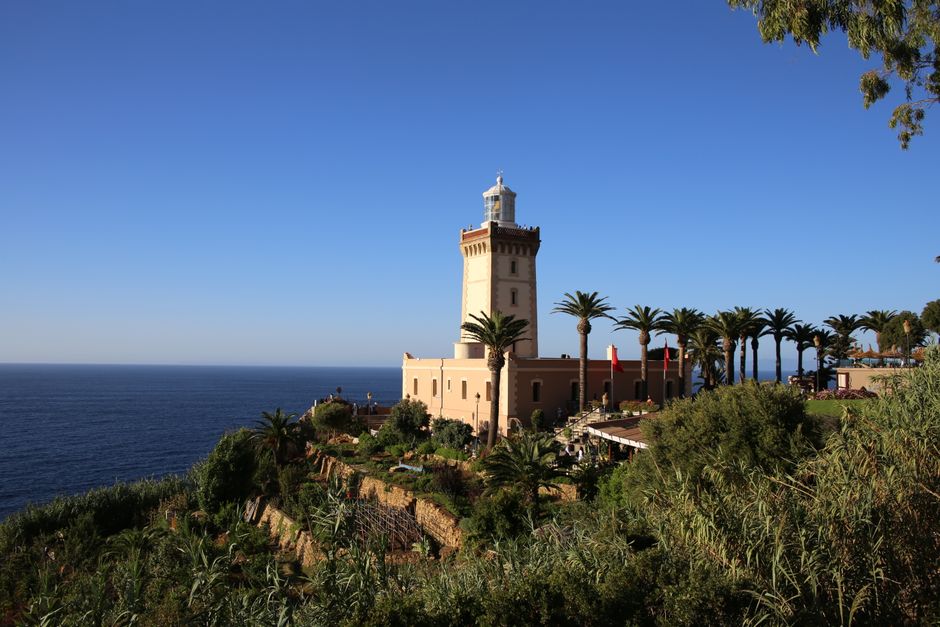
The Hercules Caves encapsulate well the ambiguities of Tangier: ancient myth, intense tourist visitation, literary imagination, and geological reading of the site. You have to go there knowing what you are looking for. For a history enthusiast, the interest is not only the cave itself but the fact that it recalls the ancientness of the stories linked to Tingis and the strait. For a traveler in 48 hours, it is a strong conclusion because it puts geography back at the center of the historical narrative.
In the late afternoon, the trip to Cape Spartel often works very well: traffic is sometimes smoother than in mid-morning and the light on the strait gives a real coherence to the end of the route, especially in clear weather.
Practical tips for successfully completing this chronological itinerary in Tangier
The first piece of advice is simple: do not overload. Tangier seems compact, but the elevation changes and observation breaks take time. Below 6 useful hours of visiting per day, it is better to sacrifice a secondary site than to rush from one point to another. The second piece of advice concerns the order: if you reverse the days, the city will be less easy to read, as international modernity will take precedence over the ancient foundations.
For transportation, the small taxi remains practical for short connections, especially to the Tanger Ville train station, the corniche, or Cape Spartel. If you arrive from Casablanca on Al Boraq, count about 2 h 10 to 2 h 30 depending on the schedule; from Tarifa, the sea crossing to Tanger Ville often takes around 1 hour, excluding boarding. These times vary according to the season, wind, and daily operation: they should be treated as rough estimates, not guarantees.
Regarding the season, spring and autumn remain the most comfortable. Summer offers a very lively city, but also more crowds and temperatures that regularly exceed 30 °C during the hottest hours. In winter, Tangier can be superb, with clear light and fewer crowds, but wind and rain sometimes complicate the reading of the waterfront. If you want to photograph the panoramas, aim for the early morning hours or late afternoon.
- Closed shoes: the cobblestones and slopes of the kasbah tire quickly.
- Cash in MAD: useful for small purchases, taxis, or modest entrances.
- Time reserve: keep at least 30 to 45 minutes margin per half-day.
- Morning visit: better for the kasbah, ramparts, and views of the bay.
FAQ
Can this Tangier itinerary be followed without a guide?
Yes, if you like walking and reading places. A smartphone with an offline map is generally enough, as the core of the route fits within a tight perimeter. A local guide becomes especially useful if you want to deepen the antique, diplomatic, or literary periods in less time, or avoid missing urban details that are not visible at first glance.
Is this route suitable for children or active seniors?
Yes, but by lightening it. The sensitive point is not the raw distance, but the relief: in the kasbah and medina, the climbs are real. With children or seniors, it is better to plan 2 to 3 taxi rides and limit continuous walking to 60 to 90 minutes. In practice, many visitors keep Cape Spartel as an option rather than an obligation.
Should one sleep in the medina or in the modern city?
For a historical itinerary, sleeping in or near the medina is the most coherent: you start early in the right place and save time on day 1. For more logistical comfort, the modern city around Tanger Ville simplifies train arrivals and early departures. In both cases, the gap remains moderate if you use taxis, often on urban trips costing 20 to 40 MAD.
How much time is needed to add Cape Spartel and the Hercules Caves?
Plan in practice 3 to 4 hours round trip from the center, including transport, if you want to enjoy the landscape without rushing. Below this time, the outing becomes mainly photographic and loses part of its geographical interest. If you leave in the late afternoon, also keep a margin for the return depending on traffic.
Is it a good idea to visit Tangier in the middle of summer?
Yes, but you need to change your pace. Start early, take a long break between 1 p.m. and 4 p.m. and save the panoramas for the end of the day. Summer is lively, but it increases fatigue on the sloping streets and around very busy areas. If you insist on visiting the kasbah, medina, and waterfront all in the same day, plan for more water and longer breaks.