
Between a sparkling bay, sculptural architecture, and golden beaches, Sydney achieves the rare synthesis of economic dynamism, art of living, and grand landscapes. Here is a clear and practical dossier to explore its neighborhoods, understand its history, and optimize your stay, whether you have 24 hours, a long weekend, or a week.
Table des matières
Why go to Sydney now?
Sydney attracts by the quiet strength of its bay – one of the most beautiful in the world – and by its cultural energy, driven by an inventive culinary scene, international events, and major institutions (Opera House, Art Gallery of New South Wales, Australian Museum). The city combines historic neighborhoods (The Rocks), urban art, legendary beaches (Bondi, Manly), and a spectacular hinterland (Blue Mountains). The weather, key to the experience, offers hot summers and mild winters, ideal for coastal walks, ferries, and sunsets over the Harbour Bridge.
- Ideal period: late southern spring (October-December) and late summer/early autumn (February-April) for the balance of weather/crowds.
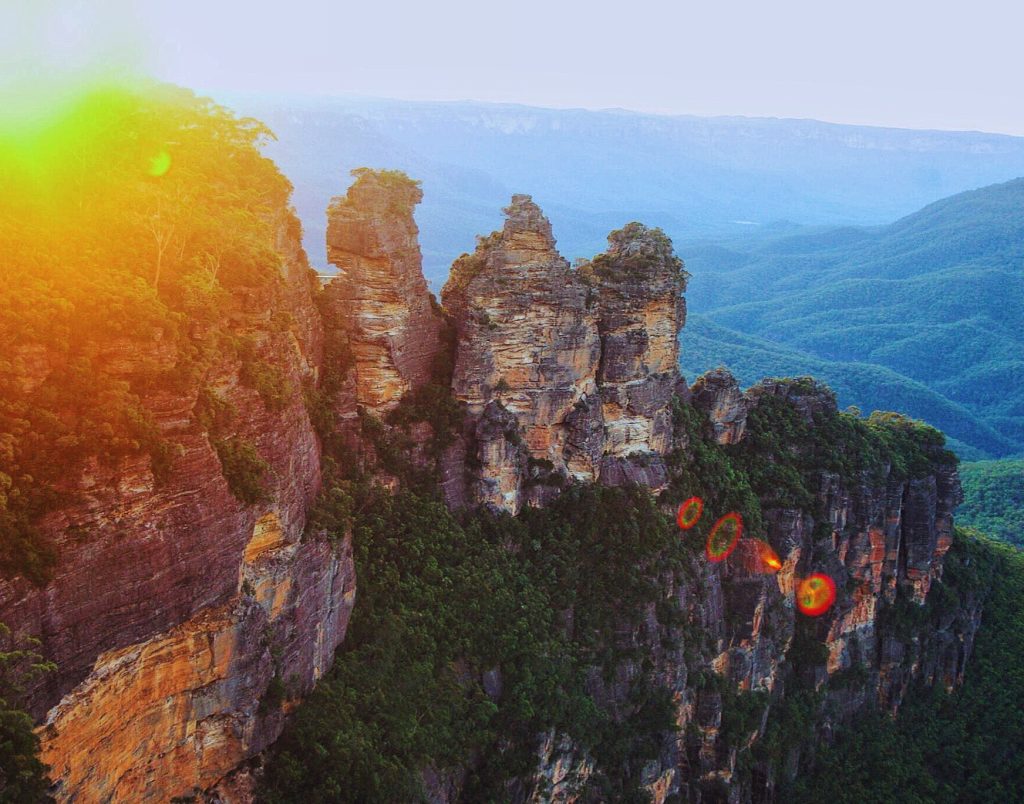
- Recommended duration: 4 to 5 days to cover the essentials + 1 day excursion (Blue Mountains).
- Indicative budget: varied accommodations, from hostels downtown to design hotels on the waterfront; dining ranging from neighborhood cafés to starred tables.
Geography and location
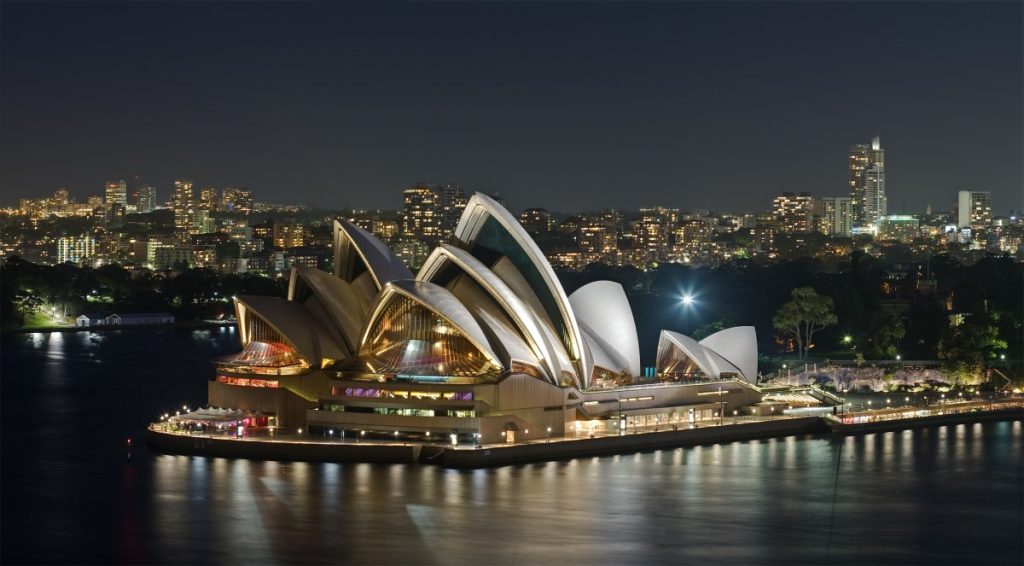
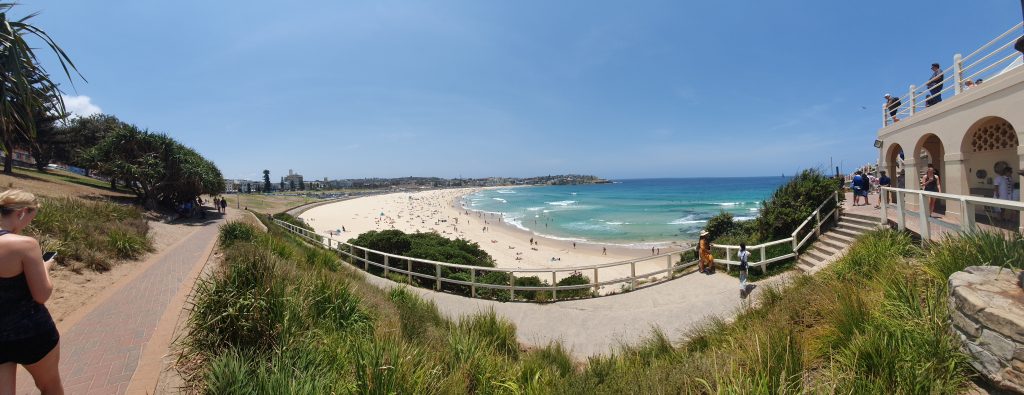
Capital of the state of New South Wales, Sydney stretches over a vast natural amphitheater centered on Port Jackson, a network of sea arms, coves, and islets where the Pacific Ocean slips into the city. To the east, a succession of sandstone cliffs and crescent-shaped beaches (Bondi, Bronte, Coogee) forms a spectacular coastal fringe. To the north, the Manly peninsula and its wooded reserves form a gentle transition to the Northern Beaches. To the west, the metropolis reaches hills and plateaus covered with eucalyptus trees that herald the Blue Mountains, listed as a World Natural Heritage site. This fragmented topography explains the central role of ferries and bridges, especially the Harbour Bridge, which connects the business district (CBD) to the northern shore (North Sydney, Kirribilli). Urban parks – Royal Botanic Garden, Centennial Parklands – guarantee a pleasant green continuity for wildlife (cockatoos, ibises, kookaburras) and for residents, who enjoy running by the water.
History and heritage
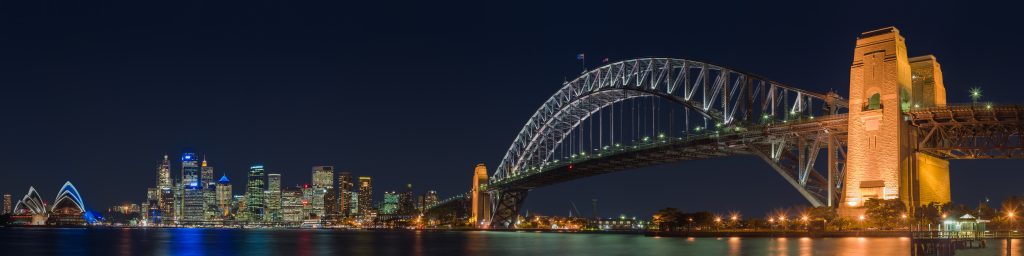
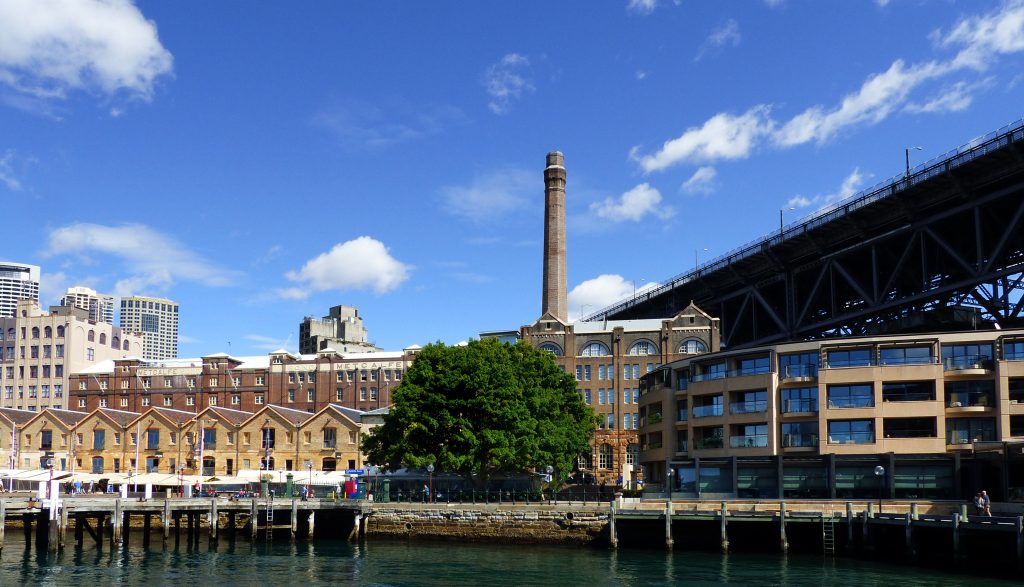
Long before the arrival of Europeans, the territory now known as Sydney had been inhabited for millennia by Aboriginal peoples – Eora, Dharug, Dharawal – whose imprint endures in place names and rock art sites. In 1788, Captain Arthur Phillip anchored in the bay, establishing the first British penal colony on the continent at Sydney Cove. This core – which would become The Rocks – developed in the 19th century with docks, sandstone warehouses, and pubs for sailors. Gold in the hinterland, the rise of wool, and maritime trade prospered the city. The 20th century sealed two major gestures: the Harbour Bridge (1932), a symbol of industrial daring, and the Sydney Opera House (1973), designed by Danish architect Jørn Utzon, the stage for a creative and political adventure as complex as it was fruitful. The 2000 Olympic Games marked a new phase: redevelopment of former industrial sites (Darling Harbour, Barangaroo), improved transport, urban opening towards the bay. Today, the city claims a multiple heritage: indigenous, colonial, industrial, and contemporary, which can be read from The Rocks to the high-tech museum extensions.
Population and Demography
Sydney is the largest metropolis in Australia. Its population, young and international, reflects successive waves of immigration: communities from East and Southeast Asia, the Indian subcontinent, Europe, and the Middle East. This diversity fuels a mixed cuisine, a rich cultural calendar, and neighborhoods with marked identities, from Cabramatta (Vietnamese influences) to Petersham (Portuguese roots) via Haymarket (Chinatown). English coexists with many languages, and there is a noticeable rise in the visibility of Aboriginal culture and local languages in signage, ceremonies, and festivals. Altogether, it shapes a city proud of its multiculturalism and attentive to reconciliation with the First Nations.
Economy and Employment
Sydney’s CBD concentrates financial services, insurance, technology, and regional headquarters. The corridor linking Barangaroo, Wynyard, Martin Place, and Circular Quay features state-of-the-art office towers and generous public spaces where executives, students, and visitors mingle. The port, reinvented as hubs of leisure, events, and dining (Darling Harbour, Cockle Bay, Barangaroo Reserve), coexists with logistics activities relocated further west. The creative economy flows through Surry Hills, Chippendale, Newtown: studios, media, design, galleries, gastronomy. Tech develops around leading universities (University of Sydney, UNSW, UTS) and incubation programs. Tourism remains a pillar, driven by the brand image of the Opera House, beaches, and major events.
Tourism: Top 5 Must-Sees
- Sydney Opera House: guided tour to uncover the secrets of its construction, exhibition on Jørn Utzon, café terrace facing the bay, concert if possible. At dusk, the building takes on superb golden hues.
- Harbour Bridge: crossing on foot or by bike for the iconic panorama. For the motivated, the supervised ascent (BridgeClimb) promises a 360° view of the bay and city.
- Coastal Circuit Bondi → Coogee: 6 km of cliffs, beaches, and ocean pools (Bondi Icebergs). Bring a hat, water, and camera; the trail is dotted with artworks during the Sculptures by the Sea festival (depending on dates).
- Museums and Gardens: winning duo Art Gallery of NSW (modern extensions, indigenous art, international collections) + Royal Botanic Garden for a green break punctuated with views of the Opera House.
- The Rocks & Circular Quay: alleys, historic pubs, markets, ferry departures to Manly or Taronga Zoo. In the evening, the walk to the Barangaroo terraces is very pleasant.
Local specificities: flavors, know-how, culture
Sydney’s cuisine embraces its diversity: rock oysters, local fish, inventive Japanese cuisine, high-level Middle Eastern and South Asian influences. Coffee is almost a religion: rigorous espresso, carefully made lattes, the Australian signature “flat white,” creative brunches. On the craft side, goldsmithing and ceramic workshops flourish in Marrickville and Redfern, while markets (Carriageworks, The Rocks, Glebe) highlight farm products, design, and textiles. The music scene offers intimate venues and large halls, and festivals combine light art, performances, and gastronomy. Sports – surfing, rugby, cricket – bring people together both in the stadium and on the beaches. Finally, several places convey Aboriginal history and cultures in the heart of the city, with guided tours focused on native plants, stories, and ancestral sites.
Transport and access
Arriving: Kingsford Smith Airport is located south of the center, connected by train (Airport Link), bus, taxis, and ride-sharing. Getting around: the Transport for NSW network combines suburban trains, metro (City & Southwest), tram (L1-L3), buses, and ferries. The Opal card and contactless payment (credit card) simplify trips, with advantageous daily/weekly caps. Ferries are both practical and scenic (Circular Quay ↔ Manly, Mosman, Parramatta). Cycling is growing with new connections (CBD ↔ Inner West, Redfern, Pyrmont). Walking remains king in coastal and historic areas: prioritize comfortable shoes, sun protection, and water.
- Tip: take a ferry during the “golden hour” to photograph the Opera House and the Bridge under low-angle light.
- Advice: on the east coast, buses are frequent but travel times can lengthen during peak hours; plan ahead if you have a guided tour.
Local life: education, sport, associations
Universities (University of Sydney, UNSW, UTS) shape intellectual life with lectures and university museums open to the public. Libraries and community centers host workshops, classes, and exhibitions. Outdoor sports structure daily life: morning surfing at Bondi or Maroubra, jogging around Mrs Macquarie’s Chair, swimming clubs in ocean pools, cricket in summer, rugby in winter. The associative network – environment, art, heritage – is active, especially in coastal preservation, replanting, and promoting Aboriginal cultures. Farmers’ markets (Carriageworks, Eveleigh) connect producers and city dwellers, encouraging short supply chains and seasonal cooking.
Periodic events and seasons
The calendar unfolds with events combining light, music, art, sport, and gastronomy. In the southern summer, the city stays lively outdoors late: open-air cinemas, festivals on the grass in parks and on the wharves. Autumn and spring are ideal for coastal hikes, major exhibitions, and concerts. Winter, milder than in Europe, favors museums, markets, and light events. Depending on your timing, check with the tourist office for exact dates and ticketing for major moments, from Opera performances to surfing competitions, including marathons and regattas on the bay.
Real Estate and Urban Planning
Urban planning is organized around a bay-park and a business center that is becoming more mixed-use (housing, shops, public spaces). The new waterfront neighborhoods (Barangaroo) illustrate industrial conversions towards pedestrianized, green areas, while inner suburbs (Inner West, Alexandria, Redfern) combine Victorian houses, renovated warehouses, and micro-parks. Real estate pressure remains high: proximity to the CBD and beaches, quality of schools, and access to transport strongly influence prices. Municipal authorities are focusing on densification near transport lines, bike routes, and green shading to combat heat islands. On the heritage side, the protection of sandstone buildings, historic pubs, and Victorian cottages preserves the soul of the neighborhoods.
3-Day Itinerary Idea
Day 1 – Bay and Icons: Circular Quay, guided tour of the Opera House, Royal Botanic Garden up to Mrs Macquarie’s Chair, ferry to Manly, return at sunset, walk on the Harbour Bridge. Day 2 – Beaches and Trails: breakfast at Bondi, walk Bondi→Coogee with swimming breaks, museum/gallery in the afternoon (AGNSW or MCA), dinner at Barangaroo. Day 3 – Neighborhoods and Creative Scene: coffee in Surry Hills, design in Chippendale/Carriageworks, window shopping in The Rocks, market if weekend, panoramic cocktail on a CBD rooftop.
Logistical Tips and Best Practices
- Australian sun: high SPF index, hat, sunglasses; reflection on water and sand is strong.
- Swimming: swim between the lifeguard flags, be cautious of rip currents and swell.
- Ferries: sit at the back for unobstructed views of the Opera House and the Bridge.
- Transport payment: contactless bank card accepted like an Opal card.
- Etiquette: respect trails in coastal parks, do not feed wildlife.
Neighborhoods to Explore
The Rocks: historic cradle, pubs, and craft market. Surry Hills: cafes, bistronomic restaurants, designer boutiques, galleries. Newtown: street art, thrift shops, indie bars, world cuisines. Darling Harbour & Barangaroo: waterfront walks, museums, restaurants. Paddington: Victorian houses and Saturday markets. Manly: beach atmosphere accessible by ferry, good snorkeling spots near Shelly Beach.
Top Activities According to Weather
Clear Blue Sky
- Walk Bondi → Coogee and swim in an ocean pool (Icebergs, Bronte Baths).
- Ferry to Manly and snorkeling at Shelly Beach.
- Picnic at the Royal Botanic Garden with a view of the Opera House.
- Sunset from Observatory Hill or Mrs Macquarie’s Chair.
Rainy day
- Art Gallery of NSW: contemporary wing, Aboriginal art, temporary exhibitions.
- Museum of Contemporary Art (MCA) at Circular Quay.
- Australian Museum: nature, mineralogy, First Nations peoples.
- Covered passages of The Strand Arcade and Queen Victoria Building.
With children: family ideas
Taronga Zoo (for views, hard to beat), Sea Life Sydney Aquarium, “adventure boat” ferry rides, coastal playgrounds, interactive museums, and gentle wave beaches (Balmoral). Remember shaded breaks and reapplying sunscreen; stroller logistics are generally easy (elevators in stations, wide sidewalks).
FAQ
What is the best neighborhood to stay in Sydney?
For a first visit, aiming for the CBD/Circular Quay or The Rocks avoids transport time and multiplies views. Surry Hills and Darlinghurst suit café and nightlife lovers. Bondi or Manly will appeal to “beach” travelers ready for 20–35 min transport to the center. How many days to see the essentials?
Three well-structured days cover bays, beaches, and museums. Add a day for the Blue Mountains or the Hunter Valley if you enjoy nature or oenology. Can you swim all year round?
Yes, locals swim all year, but the water is most pleasant from December to April. Favor supervised areas and, if the swell is strong, the safe ocean pools. Should you rent a car?
Unnecessary for the city center: efficient transport and scenic ferries. Rent only for specific excursions (Blue Mountains, Royal National Park) or if you choose accommodation outside the center. What souvenirs to bring back?
Local ceramics, macadamia products, micro-roaster coffees, books and photo prints on bay architecture, crafts inspired by Aboriginal patterns (check ethical labels).