
A thermodynamic water heater (CET) combines a small heat pump (PAC) and a hot water tank. Objective: to provide domestic hot water (DHW) while consuming 2.5 to 3.5 times less electricity than a resistance tank, provided the type (ambient air, outside air, extracted air), volume, and location are well chosen. This guide details the principle, variants, sizing, installation, a reproducible savings calculation, observed installed prices in 2025, and available aids.
TL;DR : Principle: the heat pump extracts heat from the air and transfers it to the water. Benefits: ~50–70% electricity saved vs. electric tank, typical COP 2.5–3.5. Keys: volume 200–300 L depending on household, suitable room or external ducts, setpoint 55 °C and anti-legionella cycle.
Table des matières
Research Intent and SERP
Main intent: understand how it works, estimate savings, and know what to buy/have installed. The French SERP highlights ADEME, France Rénov’, Anah/Service-Public for aids and criteria, as well as manufacturers and comparison sites for prices and technical sheets. Frequent gaps: confusion about the three air intakes, minimal room volumes rarely specified, uncontextualized savings promises, tank volume errors. This guide synthesizes normative references (EN 16147), provides reproducible numerical benchmarks, and observed installed price ranges.
1) Operating principle
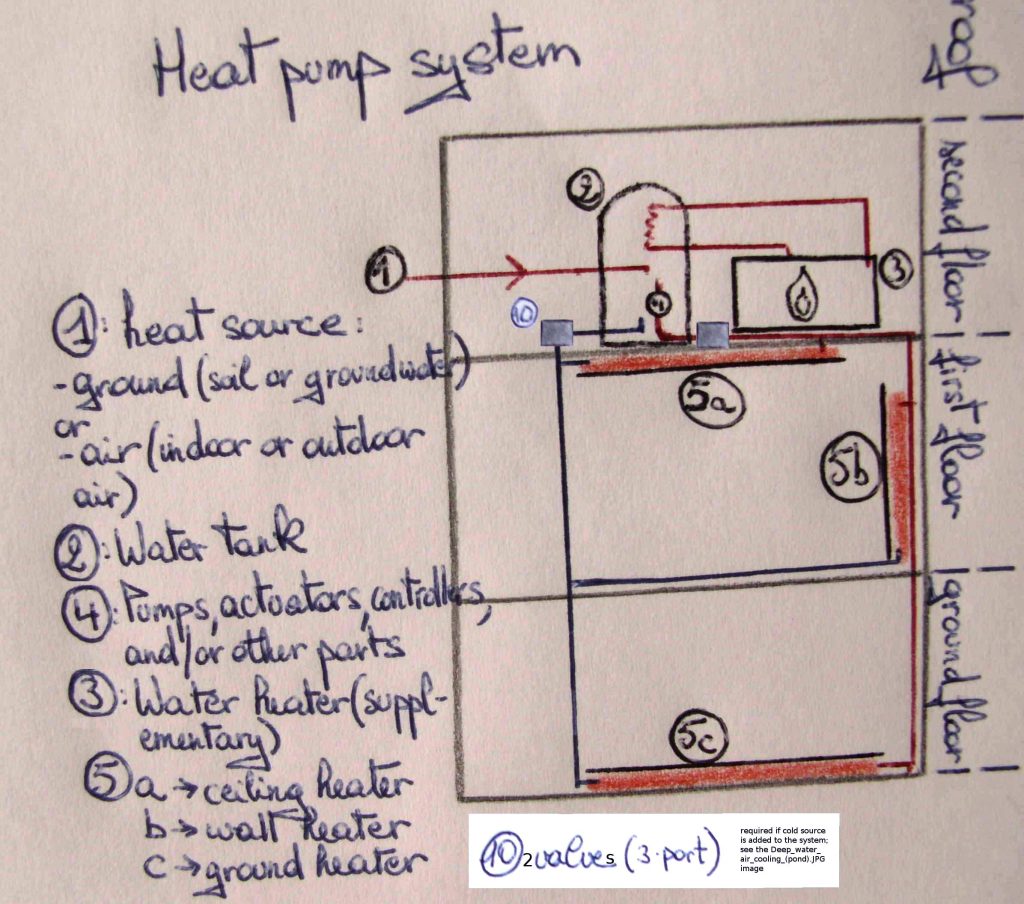
A CET is a 150–300 L tank coupled with a heat pump dedicated to DHW. The evaporator extracts heat from an air source (room, outside, extracted air), the compressor raises the temperature level, and the condenser transfers it to the tank water. An electric resistance remains as backup (peaks, antibacterial cycles, severe cold). Efficiency is expressed via the COP (kWh thermal output/kWh electrical input). At COP 3, 1 kWh electric provides 3 kWh to the water. The COP mainly varies with the temperature of the intake air, the setpoint (often 55 °C), the air flow, and installation quality.
2) Types of CET and uses
Ambient air (non-ducted monobloc): the unit draws in and expels air in the same room (pantry, frost-free garage). Advantages: simplicity, moderate installation cost. Constraints: cools and dehumidifies the room; aim for a sufficient air volume (roughly ≥ 20 m³) and avoid heated rooms.
Outside air: ducted monobloc (two ducts) or split. Air is captured and/or expelled outside to avoid cooling a heated volume and maintain a stable COP. Beware of pressure losses in ducts, airtight penetrations, and defrosting in winter.
Extracted air: heat recovery from extracted air via dedicated ventilation. Efficient because the air is warm and steady, but requires coherent ventilation + DHW design (compatible flows, not a standard hygro VMC not designed for this).
3) Sizing, performance, standards
Useful volume: 200 L often suits 2–4 people with showers, 250–270 L for 3–5, 300 L for 4–6 depending on habits (baths, close showers, washing machine on hot water, etc.). A tank that is too small will frequently trigger the backup; too large, it will unnecessarily heat a mass of water and degrade the seasonal COP.
Standards and tests: the NF EN 16147 defines the test for heat pumps dedicated to DHW: COP at setpoint 55–60 °C and reference air temperatures (e.g. 7/15/20 °C), useful capacity “V40” (liters delivered at 40 °C), heating time. Compare datasheets under conditions close to your actual configuration.
Checkpoints: allowed air temperature range, noise level, air flow rate, possibility of ducts Ø 160–200 mm, condensate management, anode (Mg/hybrid), dedicated electrical supply, admissible floor load (full tank).
4) Savings and return on investment
Order of magnitude: the DHW heat pump consumes about 2.5–3.5 times less electricity than a resistance tank under favorable conditions. Savings depend on air temperature, withdrawal profile, and settings.
Reproducible calculation (4-person household, 50 L at 40 °C/person/day, cold water 10 °C): useful energy ≈ 200 L × 0.035 kWh/L = 7.0 kWh/day. With losses and cycles, an electric tank consumes ≈ 8.5 kWh/day, i.e. ≈ 3,100 kWh/year. With a DHW heat pump at COP 3.0: ≈ 1,030 kWh/year, thus ≈ 2,070 kWh/year saved. At €0.23/kWh: ≈ €480/year; at €0.30: ≈ €620/year. For an installed cost of €2,800–4,500, the payback is often between 3 and 7 years depending on household and climate.
5) Installation: airflow, noise, condensates
Room and air: in “ambient air”, place the DHW heat pump in a non-heated room, frost-free, ≳ 20 m³, without recirculation between intake and discharge. In ducted/split, limit duct length and bends, insulate in cold zones, ensure airtightness at wall passages and mechanical strength of ducts.
Acoustics: typical level close to a refrigerator around ~40 dB(A) at 1 m depending on model. Keep away from bedrooms, provide antivibration mounts and decoupling of the base. In split, carefully choose the location of the outdoor unit.
Condensates and frost: gravity drainage or lifting pump with siphon. Plan for management of defrost water to outside air and frost protection. Plumbing side: safety group, 7 bar valve, possible mixer, insulation on cold/hot water. Electrical side: dedicated circuit and compliant protections.
6) Settings and maintenance
Setpoint: aim for ~55 °C for regular use. Program during off-peak hours if available. Limit resistance backup to actual needs.
Anti-legionella: activate the weekly 60–65 °C cycle. On connected models, check scheduling to avoid triggering during peak hours.
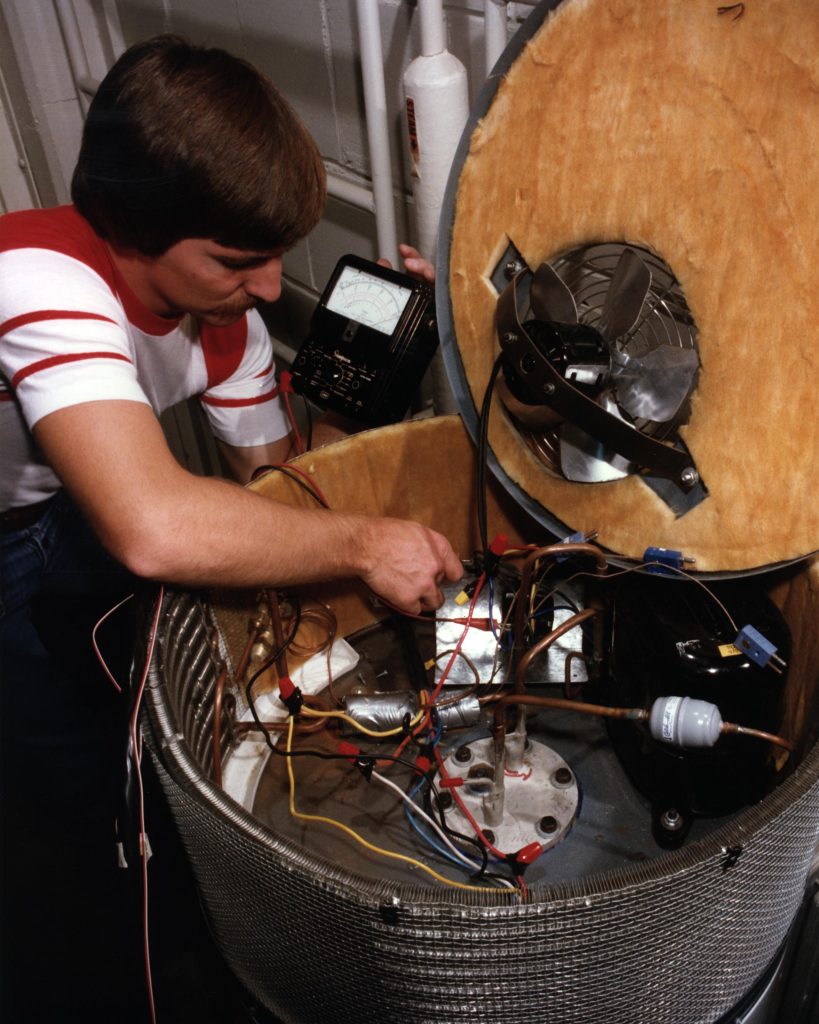
Maintenance: dust filters/exchangers, check condensate drainage, inspect ducts, monitor anode, descale according to hardness, update firmware if needed. Regular maintenance stabilizes performance and extends lifespan.
7) Installed prices in 2025 and aids
Observed installed price ranges: ~1,900 to 4,500 € VAT included depending on technology (ambient air/ducted/split), volume 200–300 L, and site complexity. Labor often accounts for 500–1,000 €.
Subsidies: MaPrimeRénov’ and CEE bonuses depending on profile and technical criteria. In 2025, indicative scales mention up to ~1,200 € on the MPR side for a heat pump water heater. Check eligibility and updated ceilings on official portals before quoting and signing, and use a qualified company to retain rights.
8) Quick comparison vs other DHW solutions
Electric tank: low investment but high consumption. The heat pump water heater divides the DHW bill by ~3 with constant usage.
Gas: efficient tank or micro-storage but dependent on a fossil fuel and specific maintenance. Compare total cost (subscription + energy + maintenance).
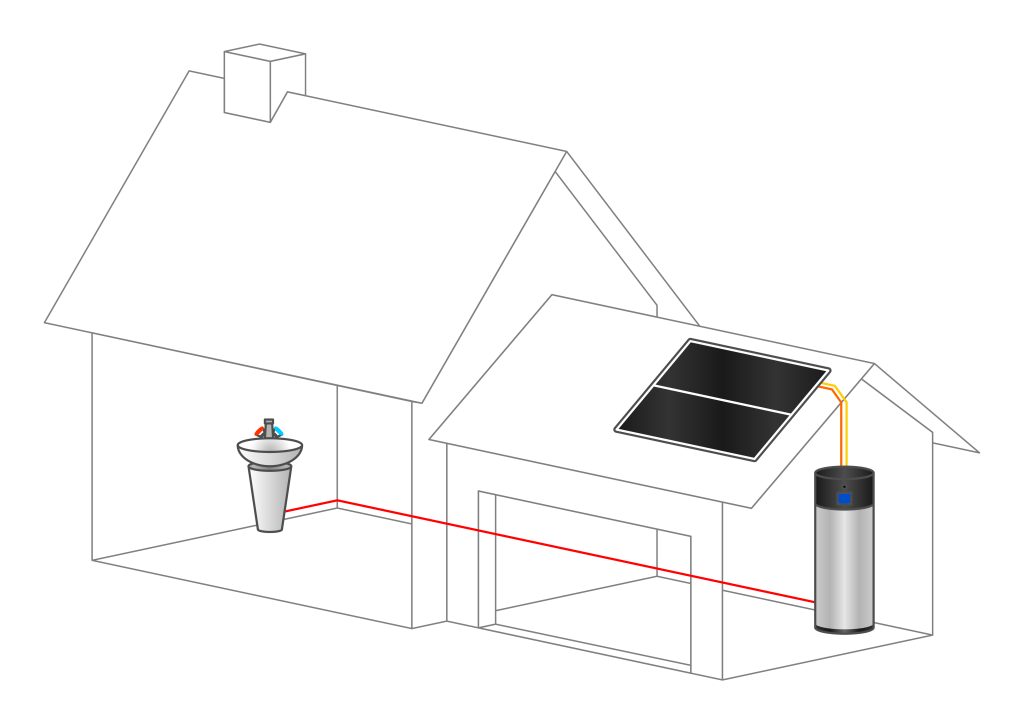
Solar thermal: very low auxiliary energy after investment, but requires surface area/sunlight. The heat pump water heater is compact and steady; combining both is possible.
Purchase and installation checklist
- Needs: estimate V40, number of occupants, simultaneities.
- Air: unheated room ≥ 20 m³ or ducted/split solution; winter/summer air temperatures.
- Routes: condensate drainage, short and insulated ducts, sealed penetrations.
- Acoustics: distance from bedrooms, antivibration mounts, night mode.
- Electric/plumbing: dedicated circuit, protections, safety group, cold/hot water insulation.
- Standards/warranties: performance according to EN 16147, tank/anode warranties, qualified installation.
- Settings: setpoint 55 °C, programmed off-peak hours, active antibacterial cycle, consumption monitoring.
FAQ
Does a heat pump water heater really use ~3× less electricity than an electric tank?
Yes, roughly speaking if the intake air is well chosen and the installation properly configured. Typical savings reach ~50–70 %.
What volume for 4 people?
200–270 L depending on habits; 300 L if close withdrawals or baths. Avoid oversizing which increases losses.
Is a minimum room needed for an “ambient air” model?
Yes. Aim for an unheated, frost-free room, often ≥ 20 m³, without recirculation. Otherwise, prefer a ducted/split model.
Is the heat pump water heater noisy?
Noise level close to a refrigerator around ~40 dB(A) at 1 m. Avoid immediate proximity to bedrooms and install on antivibration mounts.
What setpoint and should the anti-legionella cycle be activated?
Setpoint ~55 °C daily. Activate a weekly 60–65 °C cycle for hygiene.
What subsidies in 2025?
MaPrimeRénov’ and CEE depending on profile and technical criteria. Check updated amounts and conditions on official sites.
Sources
- Heat pump water heater: principle, types, gains — ADEME — ademe.fr
- France Rénov’ Benchmarks: Heating/DHW and Assistance — france-renov.gouv.fr
- 2025 Assistance Guide — anah.gouv.fr