
Island of contrasts, La Réunion features a national park listed by UNESCO, an active volcano, spectacular cirques, and a preserved lagoon. Here is a clear and useful selection of the 10 sites to see as a priority, with access tips and highlights.
To see first: the volcano, a cirque, a waterfall, a viewpoint, then the lagoon.
Plan warm clothing for the Highlands and sun protection for the coast.
Hiking is king: marked trails, information available from the National Park.
Respect nature: delicate sites, carry your trash down, no collecting.
Always check safety instructions and closures before setting out.
- 🌋 Piton de la Fournaise Shield volcano among the most active in the world, the Piton de la Fournaise offers unique lunar landscapes. The classic access is via the RN2 (Route des Laves) or via the Volcan road through the Plaine des Sables. Iconic hikes: the edge of the Fouqué enclosure, Piton de Bert, or, when conditions and prefectural orders allow, the approach to the enclosure (regulated access). Start early, weather can change and temperatures are cool even in summer. Parking at Pas de Bellecombe-Jacob. Equipment: windbreaker, water, headlamp if starting at dawn. During eruptions, the Volcanological Observatory (OVPF-IPGP) publishes access instructions. Even without lava flows, crossing the Plaine des Sables and the view of the craters guarantee a memorable moment.
 Piton de la Fournaise — Photo: mwanasimba, Wikimedia Commons (CC BY-SA).
 - 🥾 Cirque de Mafate A world apart, the cirque de Mafate is only accessible on foot or by helicopter. It features inhabited hamlets, suspended trails, and raw panoramas. Common entry points: Rivière des Galets (4×4 shuttles to trailhead), Col des Bœufs, Maïdo. Loop ideas: Aurère via Rivière des Galets, Roche Plate via the Brèche, Marla via Col des Bœufs. Overnight stays possible in lodges, book in advance. Bring water and protection (sun, rain). The terrain is demanding, but the views of the cliffs and ravines form the essence of the Reunion natural heritage listed by UNESCO. Respect the hamlets and carry your trash down: Mafate’s isolation strains local logistics.
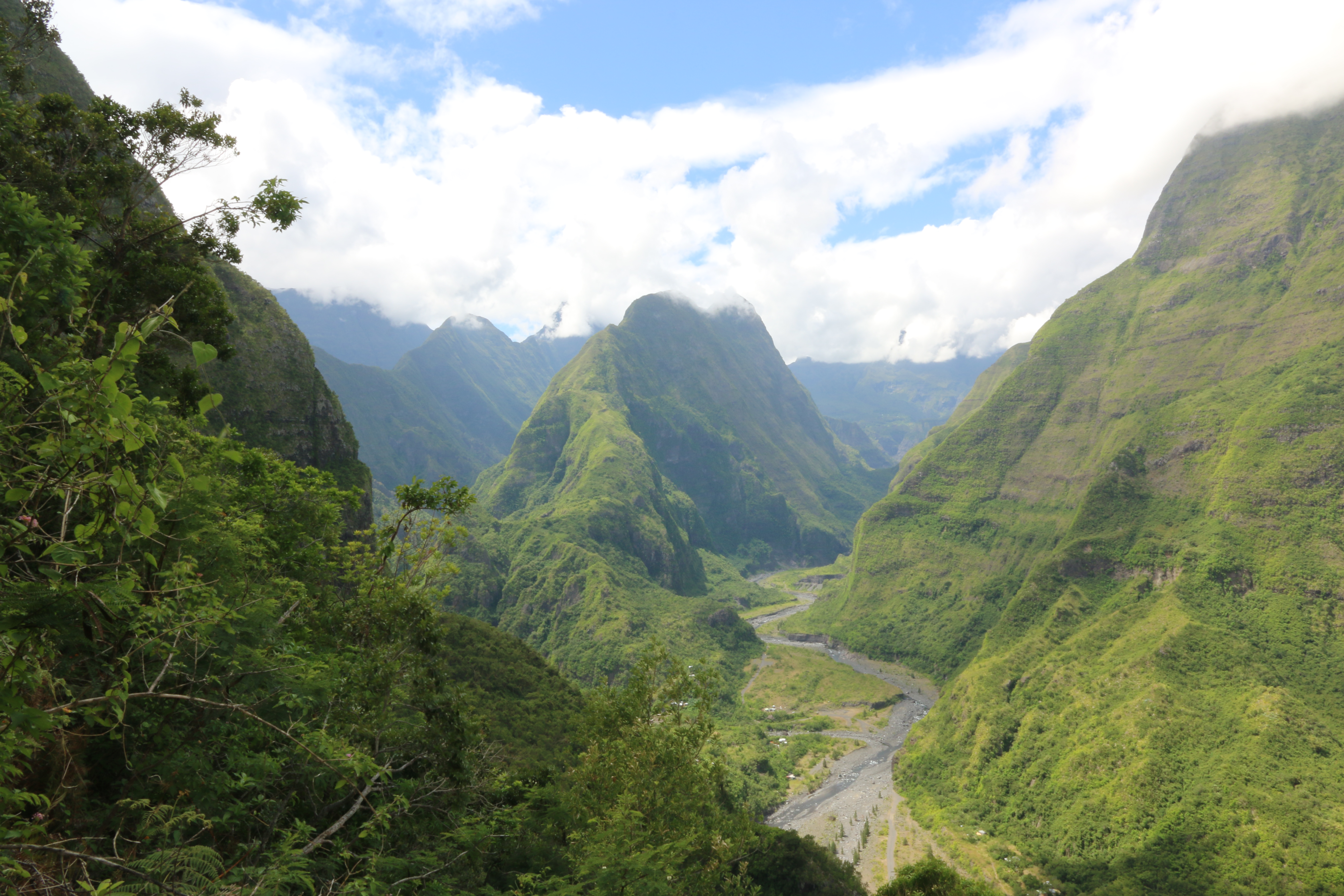 Mafate and the Rivière des Galets — Photo: Mantier, Wikimedia Commons (CC BY-SA).
 - ⛰️ Cirque de Cilaos The cirque de Cilaos is reached via the RN5, the famous “road with 400 bends”. Once in town, thermal baths, lentils, and embroidery tell the local story. Nature side: Dimitile ridges opposite, Piton des Neiges as backdrop, canyons and star-shaped trails (Bras Rouge, Roche Merveilleuse, Ilet à Cordes). Viewpoints offer a reading of the relief shaped by erosion, at the heart of the National Park. Tips: drive carefully, allow time for photo stops, and watch the weather which can occasionally close some routes. Cilaos is also an ideal base for ascending the roof of the Indian Ocean.
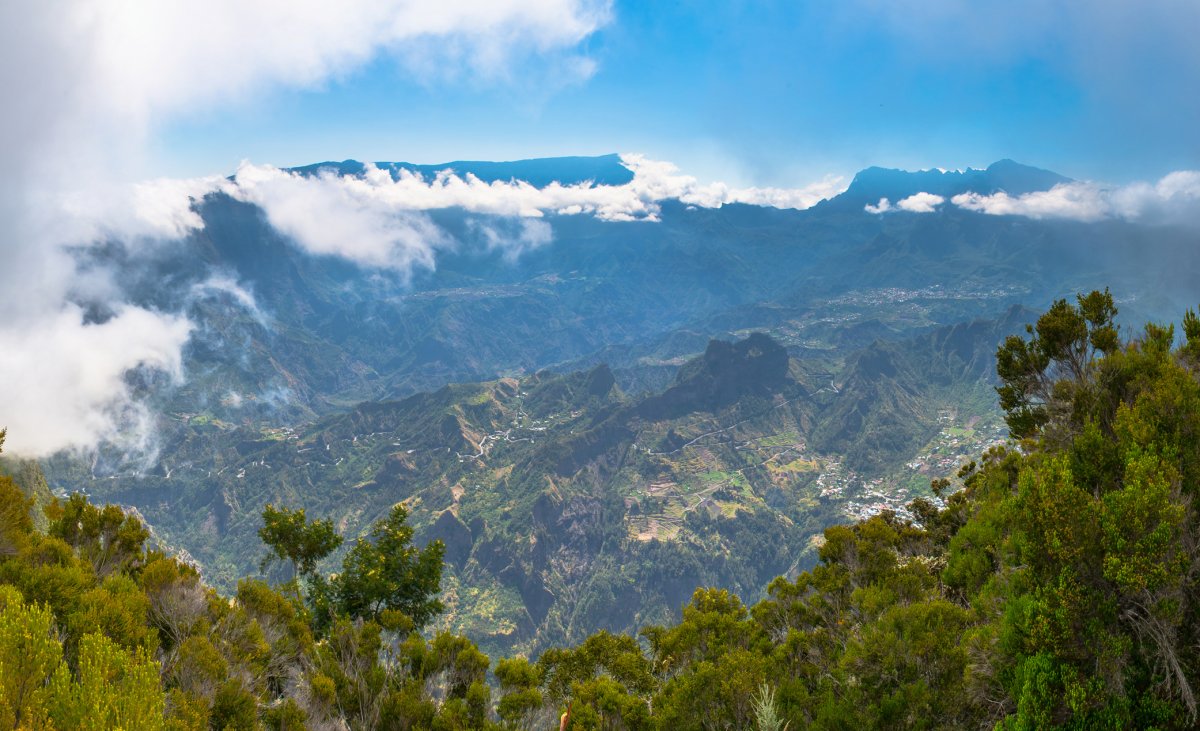 Cirque de Cilaos — Photo: Arnaud Maunier, Wikimedia Commons (CC BY-SA).
 - 🏘️ Hell-Bourg (Salazie) Ranked among The Most Beautiful Villages of France, Hell-Bourg displays colorful Creole houses, gardens, and thermal remains in the heart of the Salazie cirque. The generous humidity feeds the waterfalls, such as the Bridal Veil. On foot: heritage loop in the village, Maison Folio, trail to Bé-Mahot. The access road from Saint-André crosses banana plantations and ravines. The climate can be rainy: bring a jacket and protect your camera. The contrast between vegetal lacework and volcanic ramparts sums up the uniqueness of Réunion: Creole heritage and exuberant nature.
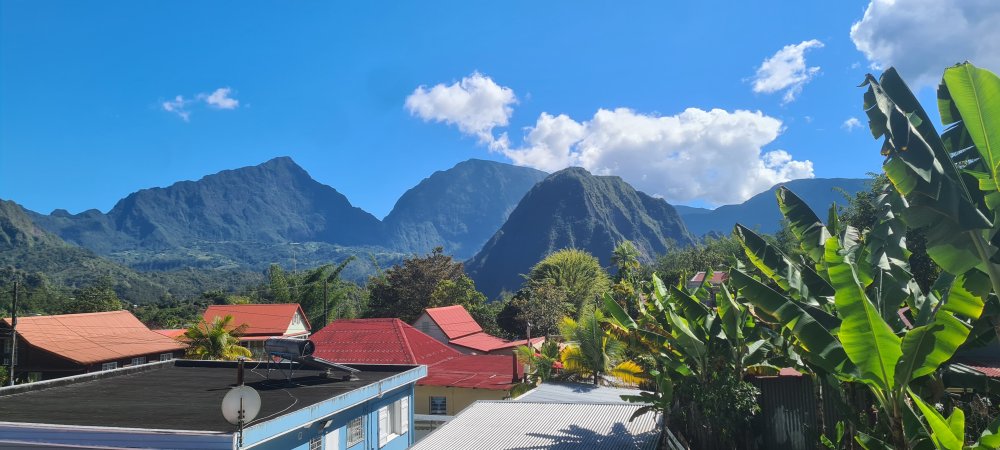 Hell-Bourg, jewel of Salazie — Photo: Guallendra, Wikimedia Commons (CC BY-SA).
 - ⛰️ Piton des Neiges The highest point of the island at about 3,070 m, the Piton des Neiges is an extinct volcano and a major hiking classic. The route from Cilaos leads to the Caverne Dufour refuge then to the summit for sunrise, facing the three cirques. Significant elevation gain, rocky terrain, cold at altitude: plan headlamps, fleeces, gloves, and book the refuge well in advance. On a clear day, the view embraces Mafate, Salazie, and the slopes of the active volcano. In good weather, the ocean sparkles in the distance. An ascent to schedule outside rainy episodes to enjoy the panorama.
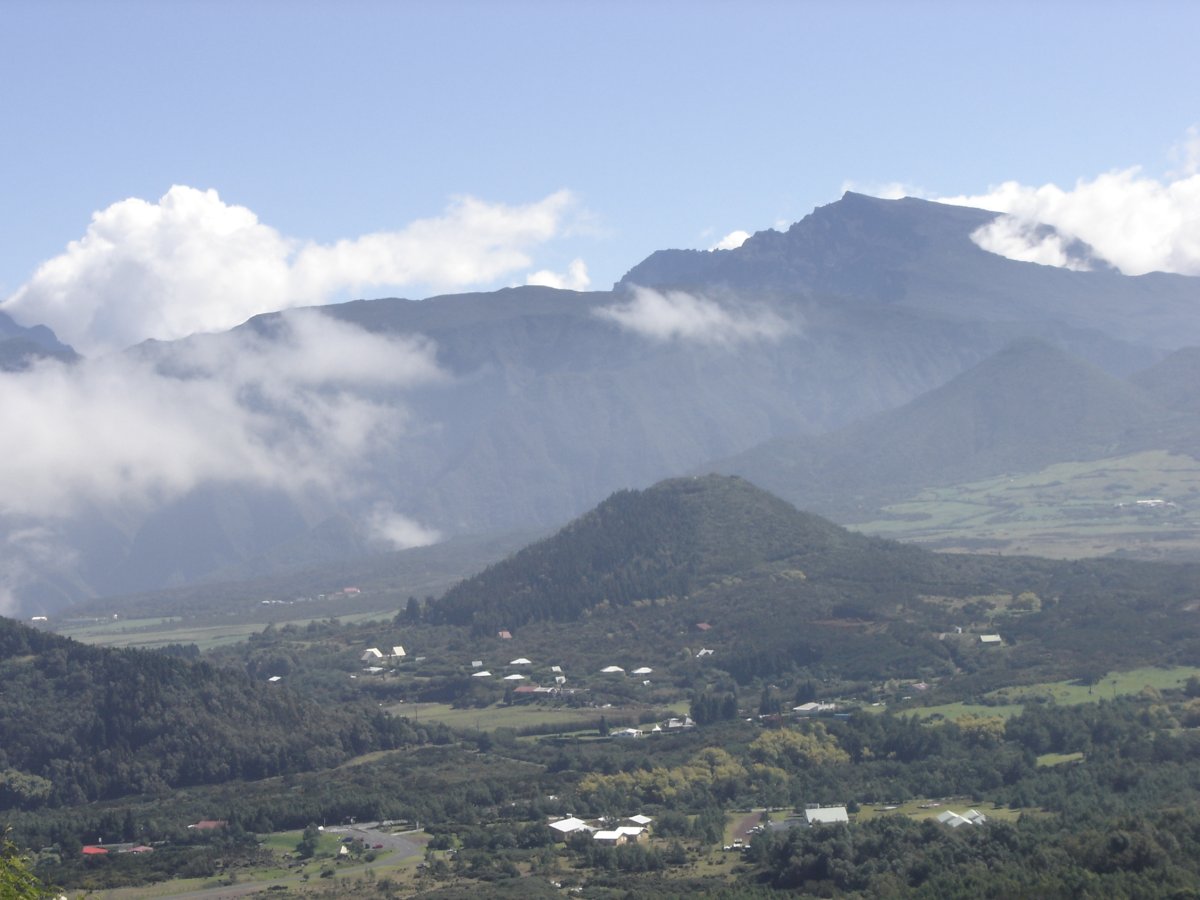 Piton des Neiges — Photo: B. Navez, Wikimedia Commons (CC BY-SA/GFDL).
 - 🌄 Maïdo Viewpoint Le Maïdo offers one of the clearest viewpoints over the Mafate cirque. Access road from Saint-Paul, equipped area, trailheads to Grand Bénare. Arrive before 9 a.m. to get ahead of the sea of clouds. In clear weather, the reading of the relief is striking: perched islets, sculpted ramparts, ridge lines. Bring windbreakers and warm clothes: the altitude exceeds 2,000 m. After the observatory, forest tracks lead to the tamarinds of the Highlands. The site illustrates the delicate management of high-altitude environments by the National Park.
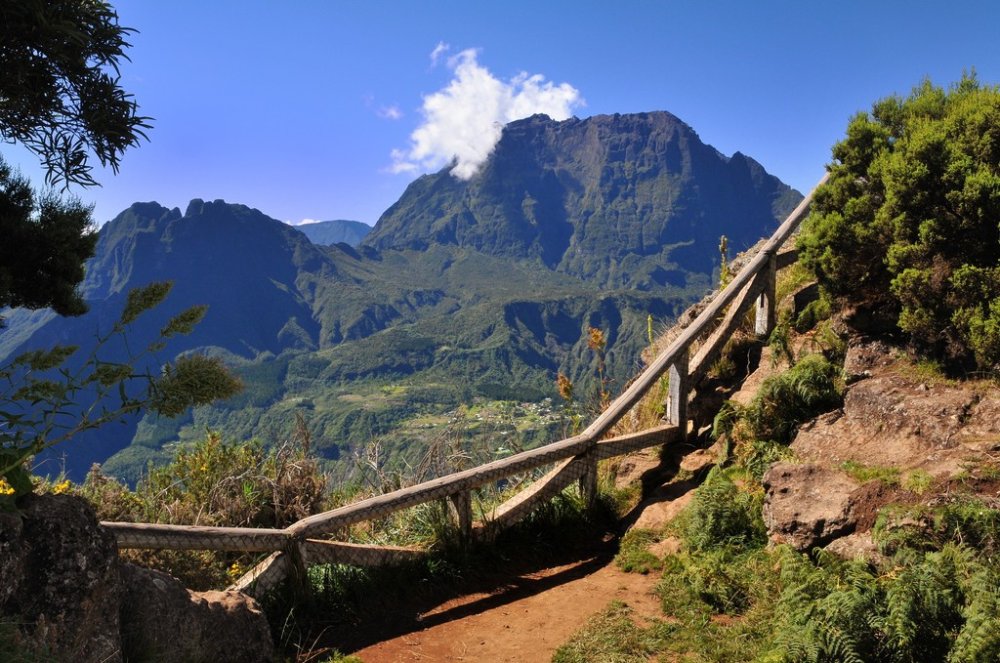 From Maïdo towards Mafate — Photo: Babawin, Wikimedia Commons (CC BY-SA).
 - 🏖️ Hermitage Lagoon Protected by the coral reef, the Hermitage lagoon is ideal for snorkeling and sunsets. At sufficient tide, follow the marked underwater trails without touching corals or wildlife. The casuarinas extend family beaches where picnics are enjoyed in the shade. Respect the Marine Nature Reserve: no fishing, no trampling, no feeding. In the austral season, the trade wind cools the atmosphere; off-season, the water remains pleasant. Parking and shops nearby in the tourist West.
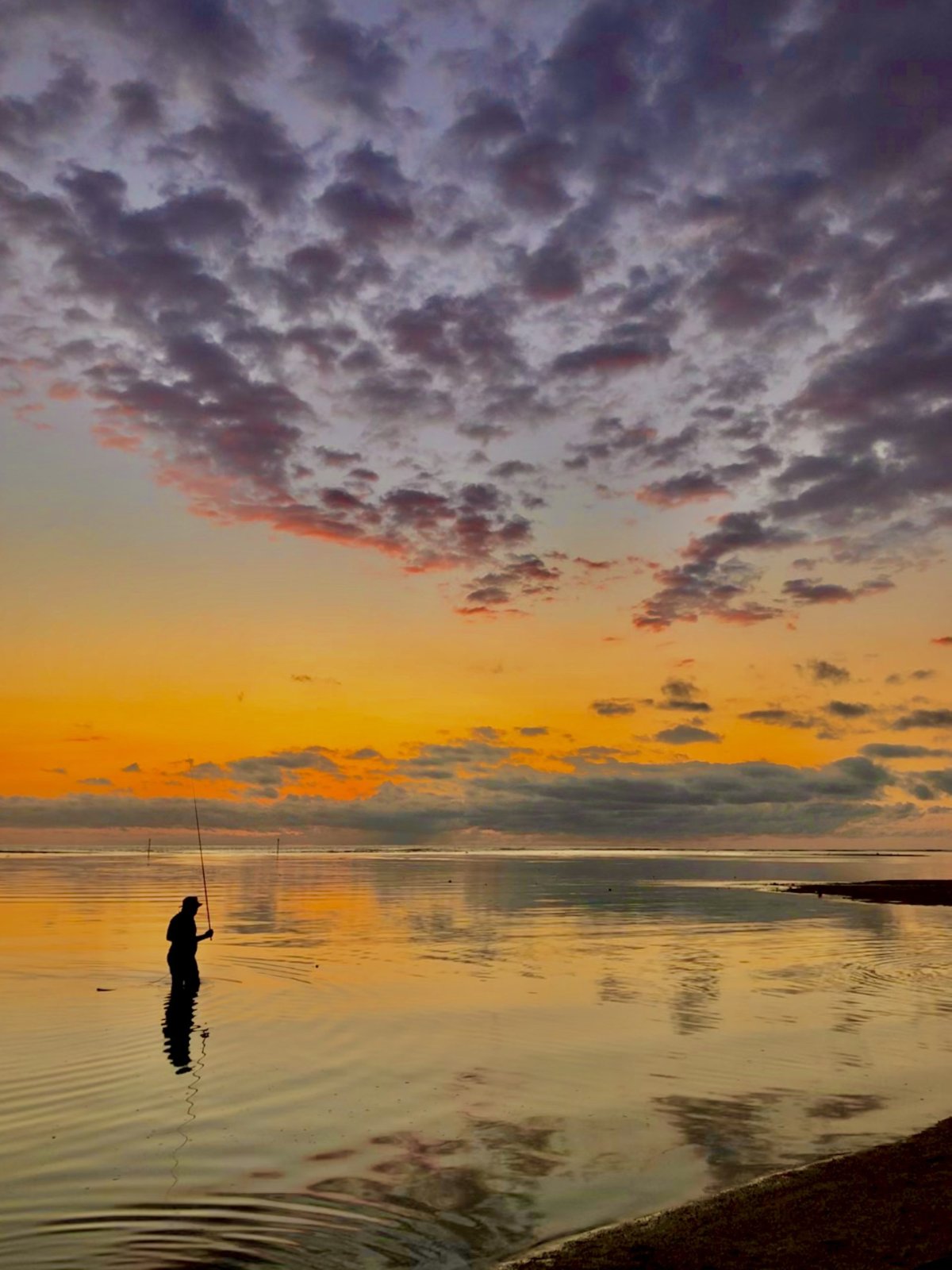 Hermitage Lagoon — Photo: Soonflower, Wikimedia Commons (CC BY-SA).
 - 💦 Langevin Waterfall (Grand Galet) In the wild south, the Langevin waterfall, called Grand Galet, lines up about fifteen fan-shaped falls in a vegetal amphitheater. Narrow access road from Saint-Joseph, parking along the riverbank: caution and respect for neighbors. Swimming possible depending on flow and current safety; beware of strong currents during floods. The rocks are slippery: water shoes useful. The site is very busy on weekends; prefer mornings. Several photo spots reveal themselves when going up the valley. It is a classic of Réunion postcards.
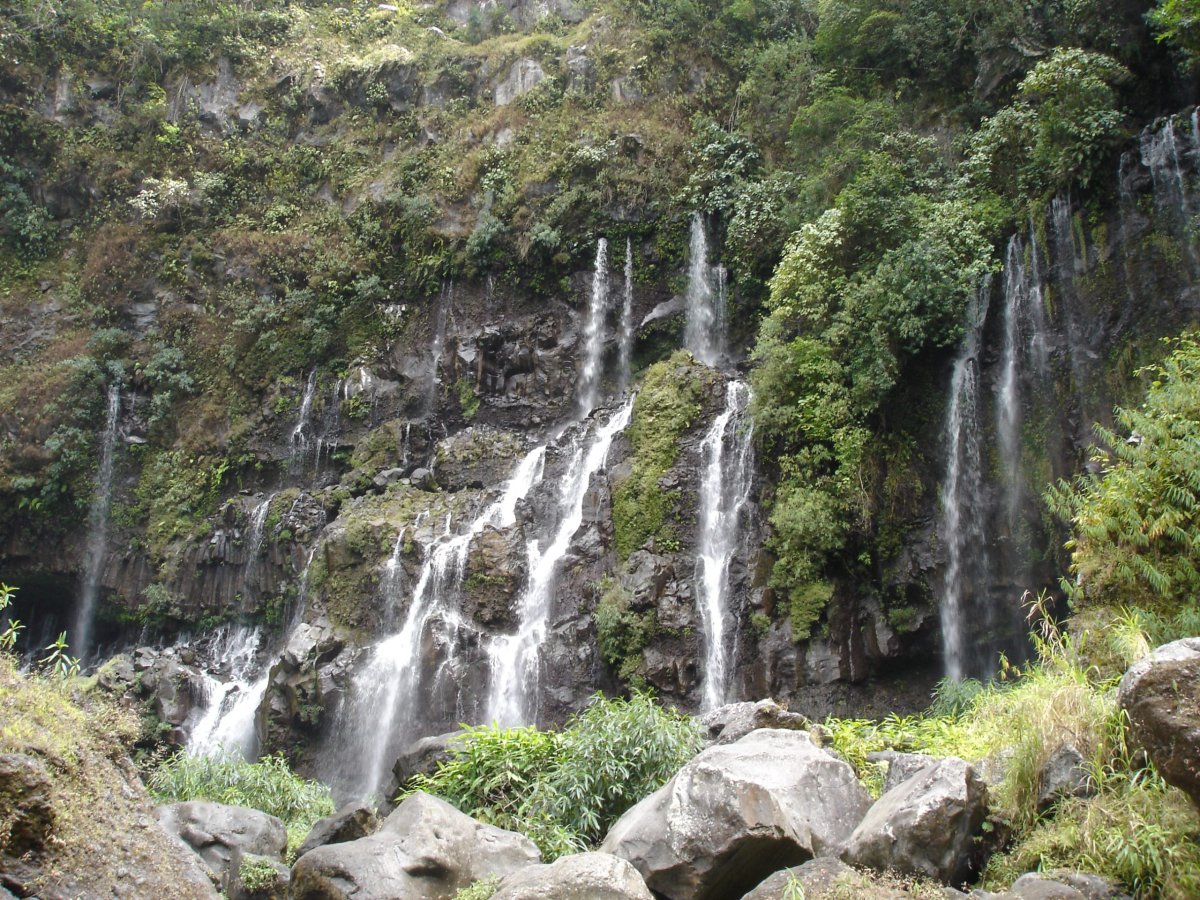 Langevin Waterfall — Photo: Thierry Caro, Wikimedia Commons (CC BY-SA).
 - 🌴 Anse des Cascades Between Sainte-Rose and Saint-Philippe, the Anse des Cascades blends coconut trees, pandanus, and streams of water falling towards the ocean. Picnic area, small paths, sheltered harbor: peaceful atmosphere, ideal for families. After cyclonic episodes, some accesses may be partially closed, check in advance. Combine the visit with the Notre-Dame-des-Laves church and the recent lava flows visible along RN2. Beautiful morning light under the foliage. Stay cautious on wet slabs.
 Anse des Cascades
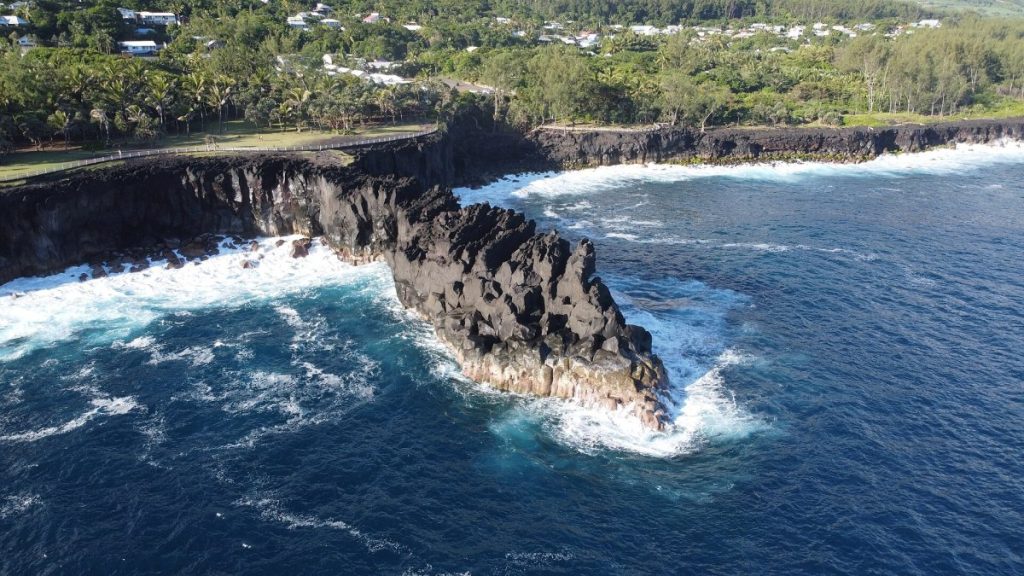
 - 🌊 Cap Méchant The Cap Méchant concentrates the power of the wild south: black basalt cliffs, Indian Ocean swell, white foam. Coastal trail, wooden kiosks, secured viewpoints: always stay behind the barriers, the sea spray can be surprising. Spectacular light with rough seas and at the end of the day. Nearby, the RN2 crosses the Grandes Pentes and the historic volcanic lava flows, contrasting with the tropical vegetation. Perfect to feel the island and volcanic character of La Réunion in a few steps.
 Cap Méchant
FAQ
What is the best time to visit these sites?
All year round, with nuances: austral summer (November-April) warmer and more humid; austral winter (May-October) cooler and more stable, ideal for high-altitude hikes. Depart early in the morning to get ahead of cloud cover.
Can you see an eruption of the Piton de la Fournaise?
Yes during active phases, but access is regulated. Follow information and orders from the Volcanological Observatory (OVPF-IPGP) and the prefecture. Never cross barriers or venture off authorized routes.
Is Mafate accessible by car?
No. Mafate is reached on foot from several passes and ravines, or by helicopter for logistics. Plan for water autonomy, respect the small settlements, and book lodges in advance.
Is a guide necessary for the Piton des Neiges?
Not mandatory, but recommended if you are new to mountain hiking. The route from Cilaos remains alpine: about 1,700 m of cumulative elevation gain, low temperatures at the summit. Book the Caverne Dufour lodge in advance if ascending in two days.
Can you snorkel everywhere in the lagoon?
Only in authorized zones of the Marine Reserve. Respect markings, no contact with corals, no collecting. Avoid passages near passes in case of currents.
What general precautions should be taken?
Check the weather, leave early, inform someone of your itinerary, bring water, sun protection, and warm clothing for the Highlands, respect marked trails and National Park instructions.
In short: start with the volcano and a cirque, add a large waterfall, a viewpoint, and a sunset over the lagoon. Always check access conditions and weather, then travel light and early. Need an itinerary for 5 to 7 days? Let me know and I will optimize the stages according to your interests.