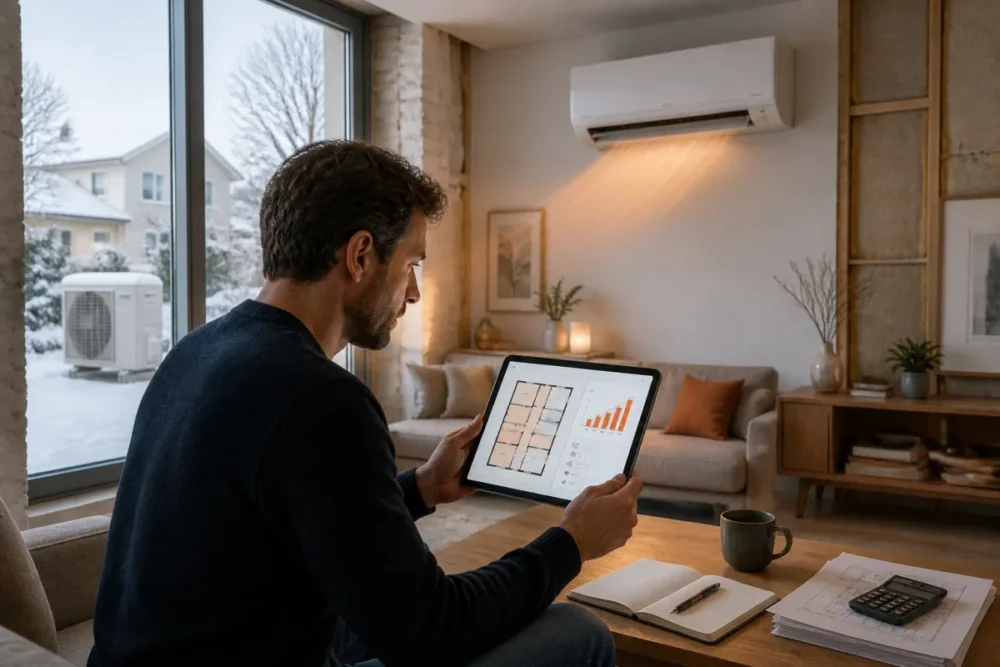
The air-to-air heat pump: useful analysis before purchase is mainly a matter of context. On paper, the system is appealing: it heats in winter, cools in summer, consumes less than direct electric heating under good conditions, and promises quick comfort. But in real life, between an old poorly insulated house, a well-exposed recent apartment, and a secondary residence used intermittently, the outcome can vary greatly.
The key point is therefore not whether the air-to-air heat pump is “good” or “bad.” The real question is more concrete: is it suitable for your home, your climate, your usage, and your total installed budget? Here is a reasoned analysis to understand its operation, real benefits, limitations, and the trade-offs to make before signing a quote.
Table des matières
In brief
✅ An air-to-air heat pump captures calories from the outside air to heat the indoor air. It can also operate as a reversible air conditioner in summer, depending on the model.
⚡ Its advantage comes from transferring heat instead of producing it directly: an air-to-air heat pump can provide 3 to 4 times more thermal energy than the electricity it consumes under good conditions.
🏠 The actual efficiency strongly depends on insulation, climate, sizing, and the number of indoor units. A poorly planned installation can lose much of its benefit.
💶 The budget is never limited to the price of the equipment: it must include installation, commissioning, maintenance, accessories, and sometimes additional work. Quotes should therefore be compared item by item.
An appealing solution, but not universal
The air-to-air heat pump is popular because it ticks several boxes at once: heating, cooling, room-by-room regulation, potentially reduced consumption, and often less invasive installation than a complete hydraulic system. That’s why it often comes up in discussions whenever a household wants to replace electric convectors, improve summer comfort, or modernize aging heating.
The air-to-air heat pump captures calories from outside air to heat a home, and can also cool in summer thanks to its reversibility. It is relevant if the home is properly insulated, well sized, and compatible with the installation of visible units.
But beware of the “miracle solution” effect. An air-to-air heat pump does not turn a thermal sieve into an energy-efficient cocoon. It does not produce domestic hot water, unlike other equipment. It also requires indoor units, an outdoor unit, careful regulation, and sometimes aesthetic or acoustic compromises. In other words, it can be very relevant, provided you don’t ask it to do what it cannot.
An air-to-air heat pump is judged less on its commercial sheet than on its suitability for the actual home: insulation, usage, exposure, noise, and quality of installation.
In practice, individuals often compare quotes based on the displayed price. This is understandable but reductive. The total cost depends on the number of rooms to equip, refrigerant lines, the location of the outdoor unit, the required power, and the complexity of installation. Cherry on top: two homes of the same size can require two very different configurations.
How does an air-to-air heat pump work?
An air-to-air heat pump works as a heat transfer: it extracts calories from the outside air, even when it is cold, then releases them inside via one or more wall-mounted, console, or ducted units. In reversible mode, the cycle reverses to evacuate heat from the home and produce cooling.
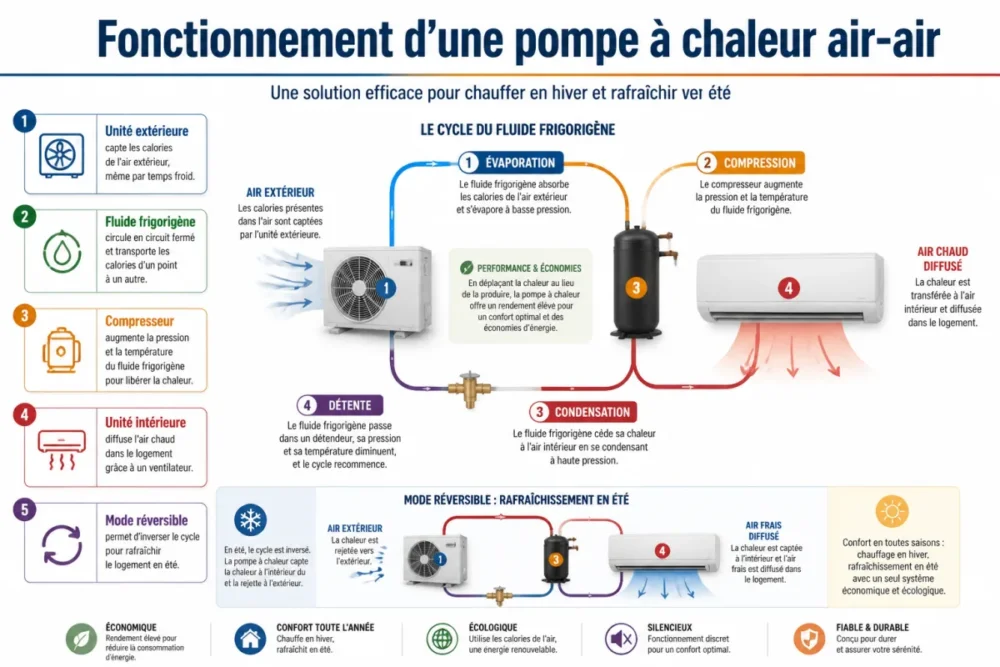
The heart of the system relies on a thermodynamic cycle. The refrigerant fluid circulates in a closed circuit between the outdoor unit and the indoor units. It changes state to transport heat: evaporation, compression, condensation, expansion. Said like that, it sounds technical. But the idea is simple: the machine uses electricity to move heat, not to create it directly like an electric resistance.
The main components to know
A classic installation includes an outdoor unit, which captures or releases heat depending on the mode used, and one or more indoor units, which distribute warm or cool air into the rooms. It is called monosplit when one outdoor unit powers one indoor unit, and multisplit when it powers several.
- Outdoor unit: it notably contains the exchanger, the compressor, and the fan.
- Indoor unit: it distributes the treated air in the room, with temperature and ventilation settings.
- Refrigerant fluid: it transports thermal energy between the circuit elements.
- Control: remote control, thermostat, programming, or connected control depending on the models.
The COP, or coefficient of performance, expresses the ratio between the energy produced and the electricity consumed. A COP of 4 means, for example, that the system provides 4 units of heat for 1 unit of electricity used. For a more realistic view, one should also look at the SCOP, which evaluates seasonal performance over a heating period.
Why is an air-to-air heat pump so attractive?
The air-to-air heat pump is attractive because it combines three very concrete promises: heating quickly, potentially reducing consumption compared to direct electric heating, and providing cooling in summer. Its interest is maximized when the needs are well targeted and the equipped rooms correspond to the real uses of the household.
The first benefit, very visible daily, concerns comfort. An indoor unit quickly blows warm air into a living room, allowing a more reactive temperature rise than with some inertia radiators or heated floors. For a living room, an office, or a bedroom exposed to the sun in summer, this reversible comfort can really make a difference.
Field observations show that satisfied users are often those who targeted the most occupied rooms: living room, open kitchen, office, or master suite. Conversely, a single unit in a hallway hoping to heat the entire house rarely gives a convincing result.
The second advantage lies in the energy logic. An electric resistance converts 1 kWh of electricity into about 1 kWh of heat. An air-to-air heat pump, on the other hand, uses electricity to move existing calories. According to technical references commonly cited by manufacturers and specialized organizations, the system can produce up to 3 to 4 times more energy than it consumes electrically under good conditions.
Finally, reversibility brings real value in homes suffering from summer overheating. In a recent, well-insulated apartment but exposed full south, or in an attic house, the need is not only to heat cheaper in winter: it is also to make heat peaks bearable. There, the reversible air conditioner becomes a practical argument, not just a commercial one.
What are the disadvantages of an air-to-air heat pump?
The main disadvantages of an air-to-air heat pump are its dependence on the outside climate, its sensitivity to the home’s insulation, the potential noise of the outdoor unit, the visual impact of the units, and the absence of domestic hot water production. It can therefore be excellent in a suitable home, but disappointing if it is poorly sized.
The first pitfall concerns actual performance. An air-to-air heat pump operates less efficiently when outdoor temperatures drop sharply, as it must extract heat from colder air. It can continue to operate, but its efficiency decreases, and supplementary heating sometimes becomes necessary depending on the climate, insulation, and expected comfort level.
The second point, often underestimated, is acoustics. Modern indoor units can be discreet: some models, for example, have noise levels of about 30 to 31 dB during indoor operation according to technical sheets from ranges like Thermic comfort Elda. But the perception depends on the room, ventilation speed, installation, and the occupants’ sensitivity. A quiet bedroom does not have the same requirements as a lively living room.
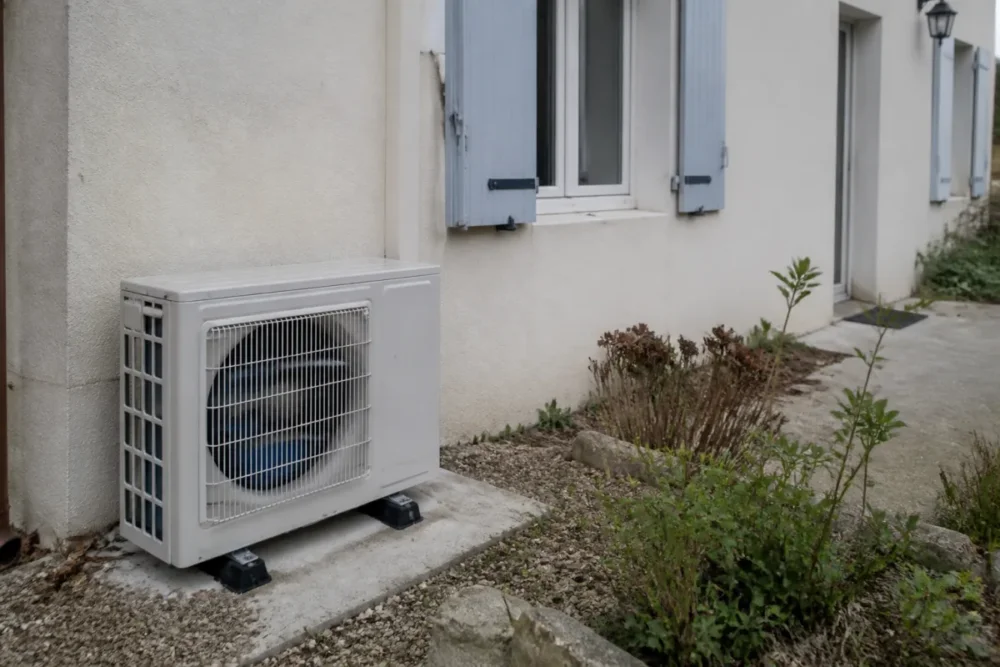
The outdoor unit also requires real consideration. It should not be placed “where there is space left,” but where it will operate properly without disturbing residents, neighbors, or maintenance. In some buildings, condominiums, or visible facades, the installation may require authorization or simply be difficult to accept. Joking aside, the best quote in the world is of little use if the outdoor unit has nowhere to go.
- Poorly insulated housing: the heat pump compensates for losses but does not eliminate them.
- Very cold climate: efficiency can drop when heating demand increases.
- Limited small spaces: unit placement can become complicated.
- Need for hot water: an air-to-air heat pump does not cover this use.
- Expectation of guaranteed savings: gains vary depending on behavior and housing.
The real risk is not installing an air-to-air heat pump, but installing it as if all homes reacted the same way.
Air-to-air heat pump budget: what really makes the bill vary?
The budget for an air-to-air heat pump varies depending on power, number of indoor units, brand, installation constraints, length of refrigerant lines, and commissioning. It is important to distinguish equipment, installation, accessories, and operating costs to properly compare two quotes.
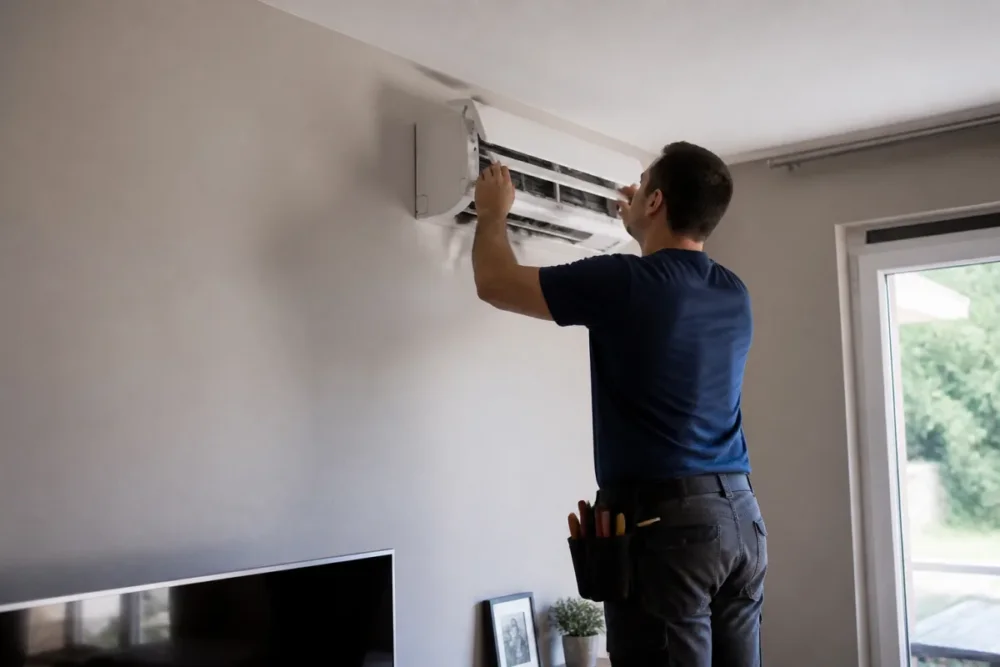
A quote for an air-to-air heat pump is not limited to the price of the outdoor unit. It generally includes indoor units, supports, drilling, refrigerant lines, condensate drainage, electrical supply, commissioning, and sometimes finishing work. This is where differences widen: a simple single-split installation is nothing like a multi-split covering several rooms.
| Budget item | What it includes | What can vary |
|---|---|---|
| Equipment | Outdoor unit, indoor units, controls | Power, brand, single-split or multi-split |
| Installation | Mountings, drilling, refrigerant connections | Distance between units, access, height, thick walls |
| Commissioning | Inspection, connection, circuit verification | System complexity and technical compliance |
| Additional work | Electricity, condensate drainage, finishing | Existing condition of the dwelling and aesthetic constraints |
| Use and maintenance | Electric consumption, cleaning, maintenance | Requested temperature, insulation, frequency of use |
According to the ADEME’s opinion on the real performance of heat pumps, performance under usage conditions should be viewed with caution: results depend on the dwelling, the installation, and behavior. The study notably mentions an average measured seasonal COP of 4.3 for air-to-air heat pumps, with variations depending on the case.
Another benchmark to handle with nuance: ADEME mentions installation costs for heat pumps that can exceed €15,000 without financial aid and return on investment periods ranging from 6 to 17 years depending on configurations. This is not a universal price for every air-to-air heat pump, but a useful reminder: profitability is not declared based on an advertising promise. It is calculated based on the heating replaced, actual usage, and the performance achieved.
What to check before comparing two quotes
To avoid comparing apples and radiators, you need to read the quotes line by line. A lower price may hide fewer indoor units, insufficient power, more basic controls, or work not included. Conversely, a higher quote may be justified if the installation is complex or if the system truly covers the priority rooms.
- Check the proposed power and the sizing logic.
- Compare the number and location of indoor units.
- Clearly identify what is included: installation, commissioning, accessories, finishing.
- Request the announced noise levels, both inside and outside.
- Verify warranty conditions, maintenance, and access to after-sales service.
How to know if an air-to-air heat pump is suitable for your home?
An air-to-air heat pump is mainly suitable for properly insulated homes, well-defined living areas, and households that want to combine heating and cooling. It becomes less relevant if insulation is very poor, if the outdoor unit cannot be installed, or if a comprehensive solution including domestic hot water is expected.
The ideal profile? A well-insulated apartment with summer comfort needs, a recent house equipped with electric convectors to be partially replaced, or a dwelling where you want to efficiently heat the main rooms without modifying the entire heating network. In these cases, the balance between comfort obtained, necessary work, and consumption can be interesting.
A family living in a 1990s house reports that the comfort gain was mainly visible in the living room and the equipped bedrooms. The distant rooms, not served by the indoor units, remained dependent on the old supplementary heating: a very concrete reminder of the importance of zoning.
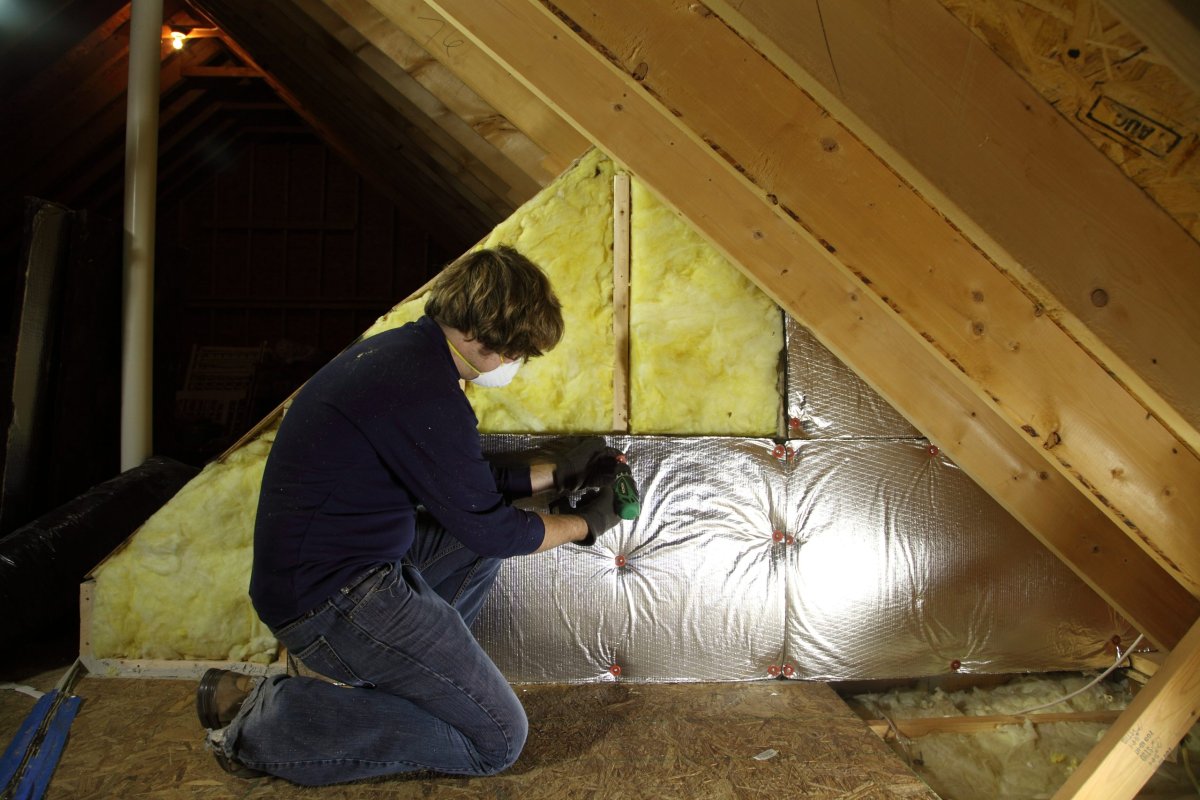
Conversely, in an old poorly insulated house, the priority should often be the building envelope: attic, joinery, air leaks, cold walls. Installing a heat pump before addressing losses can be like putting a powerful engine on a car with flat tires. It moves forward, but not as expected.
| Housing Profile | Likely Relevance | Points of Caution |
|---|---|---|
| Recent well-insulated apartment | High | Co-ownership authorization and outdoor location |
| House with electric heating | Good if zoning is consistent | Number of units and distribution between rooms |
| Old poorly insulated house | Variable to low | Insulation priority before sizing |
| Secondary residence | Interesting depending on use | Programming, rapid heating, frost protection |
| Housing with integrated hot water needs | Limited alone | Complementary system necessary |
For aid and energy renovation conditions, it remains prudent to check the current schemes with France Rénov, the public housing renovation service. Good to know: not all air-to-air heat pump configurations benefit from the same support, and rules evolve depending on equipment, income, and associated work.
Air-to-air heat pump or other solution: how to decide?
Compared to direct electric heating, the air-to-air heat pump often wins on potential efficiency and regulation comfort. Compared to an air-to-water heat pump, it is generally less integrated into central heating and does not produce domestic hot water. Compared to a classic air conditioning system, its interest mainly lies in the heating + cooling use.
Direct electric heating remains simple, inexpensive to install, and easy to control room by room. But it converts electricity into heat without a multiplying effect. The air-to-air heat pump can reduce consumption under favorable conditions but requires more work, maintenance, and thought about unit placement.
The air-to-water heat pump follows a different logic. It feeds a hydraulic network, compatible radiators, or underfloor heating, and depending on the system can contribute to domestic hot water. It is therefore often considered for a more comprehensive heating renovation, with generally higher investment and complexity.
As for classic air conditioning, the distinction is sometimes blurred in everyday language, as many air-to-air systems are reversible. The key difference to remember is the main use: if the device is designed only to cool for a few weeks a year, the economic analysis is different than for a system used as regular heating.
- Choose air-to-air if you target certain rooms and also want summer comfort.
- Consider air-to-water if you have a hydraulic network and a central heating project.
- Keep an auxiliary system if the housing is exposed to marked cold periods.
- Prioritize insulation if thermal losses dominate your bill.
Conclusion: a good solution if well thought out
The air-to-air heat pump deserves its success, but not the shortcuts that sometimes accompany it. Yes, it can improve comfort, reduce consumption compared to direct electric heating, and provide appreciated cooling in summer. No, it does not automatically suit all housing, does not produce domestic hot water, and does not compensate for poor insulation.
To decide calmly, one must reason in total cost, real use, and practical constraints. The right reflex is to request several detailed quotes, verify sizing, question unit placement, compare noise levels, and never confuse theoretical performance with seasonal performance. In other words: the air-to-air heat pump is a good idea when it meets a specific need, not when it replaces analysis.
Key Takeaways
- ⚡ The air-to-air heat pump transfers heat rather than producing it directly.
- 🏠 Insulation and sizing strongly condition real performance.
- 💶 The budget must include equipment, installation, commissioning, and maintenance.
- 🔇 Noise and outdoor location must be anticipated before quoting.
- 🌡️ Reversibility is useful if summer comfort really matters.
FAQ
Can an air-to-air heat pump heat an entire house?
Yes, but only if the installation is designed for that, with sufficient power and several well-placed indoor units. A single unit in the living room will not properly heat all the rooms in a compartmentalized house.
What is the difference between COP and SCOP?
The COP measures performance at a given moment, under specific conditions. The SCOP is more useful for comparison, as it reflects seasonal performance over a full heating period.
Does the air-to-air heat pump replace domestic hot water?
No. An air-to-air heat pump heats or cools the indoor air but does not produce domestic hot water. Therefore, it is necessary to keep or plan for an electric, thermodynamic tank, or another dedicated solution.
Is it necessary to maintain an air-to-air heat pump?
Yes, at minimum to preserve airflow, performance, and operational quality. The filters of the indoor units must be cleaned regularly, and a professional check may be necessary depending on the power and applicable regulations.
Is it cost-effective if I already have electric radiators?
Potentially, especially if the dwelling is properly insulated and the most used rooms are well equipped. But profitability depends on the installed cost, your current consumption, the local climate, and your set temperatures.