Prefecture of Tarn, Albi is a city of brick and light set on the banks of the Tarn. Around the Sainte-Cécile Cathedral and the Berbie Palace extends an intact old town, listed as a UNESCO World Heritage site since 2010. It is also a university and entrepreneurial city, supported by the IMT Mines Albi and a service economy linked to Toulouse. Here is a complete, precise, and usable dossier to understand and visit Albi.
TL;DR — Albi (Occitanie), 44.3 km², 50,605 inhabitants (2022), density ≈ 1,143 inhabitants/km² (INSEE). To see: Sainte-Cécile Cathedral, Berbie Palace & Toulouse-Lautrec Museum, Pont-Vieux, Saint-Salvi cloister, Tarn riverbanks. Access: TER Toulouse ↔ Albi approx. 53–64 min (fastest trip), Paris ↔ Albi approx. 6h11 minimum with transfer (SNCF). Real estate: average prices 2025 around ≈ €2,300–2,500/m² depending on neighborhoods and properties.
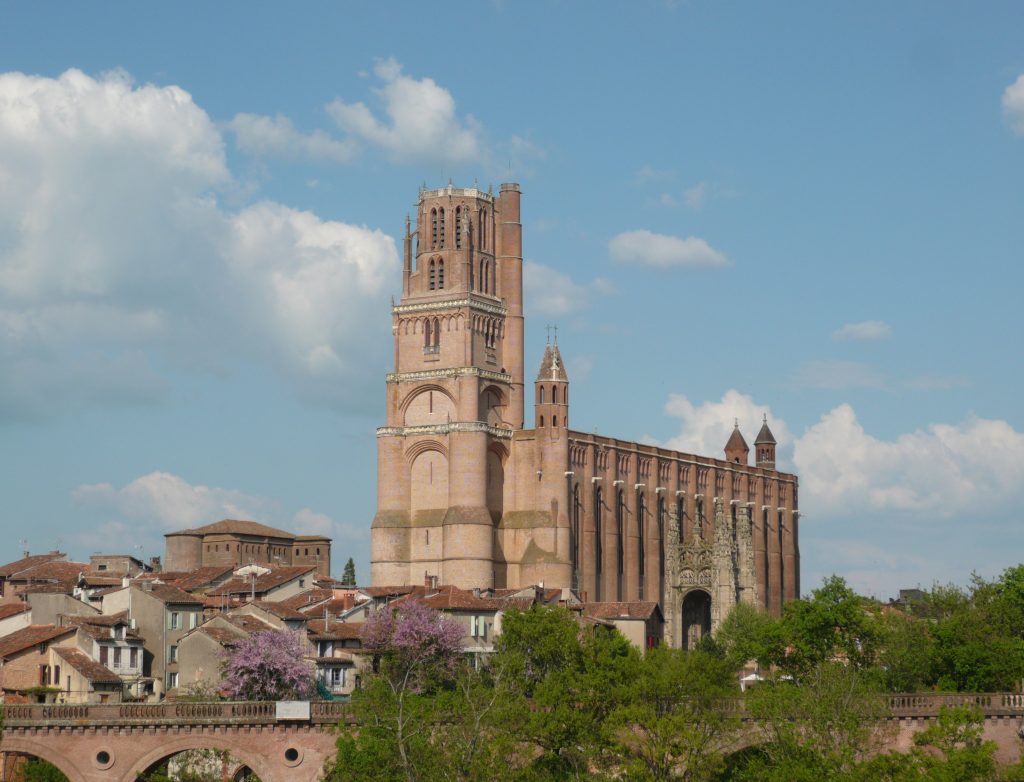
Table des matières
Geography and location: a brick city on the Tarn valley
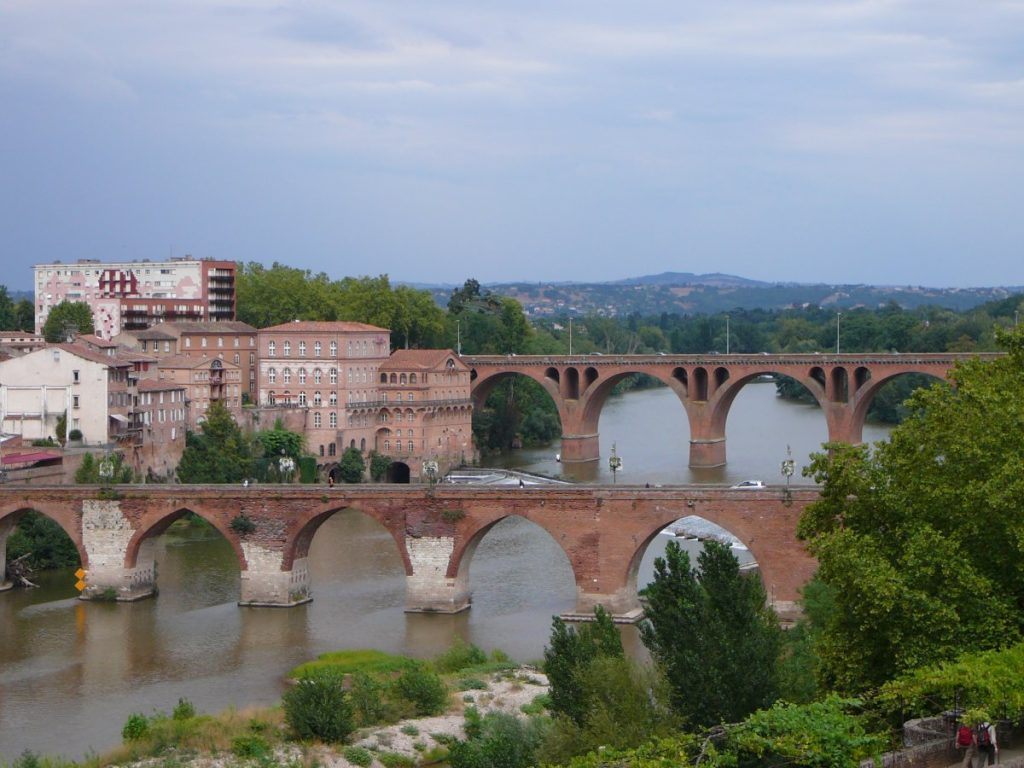
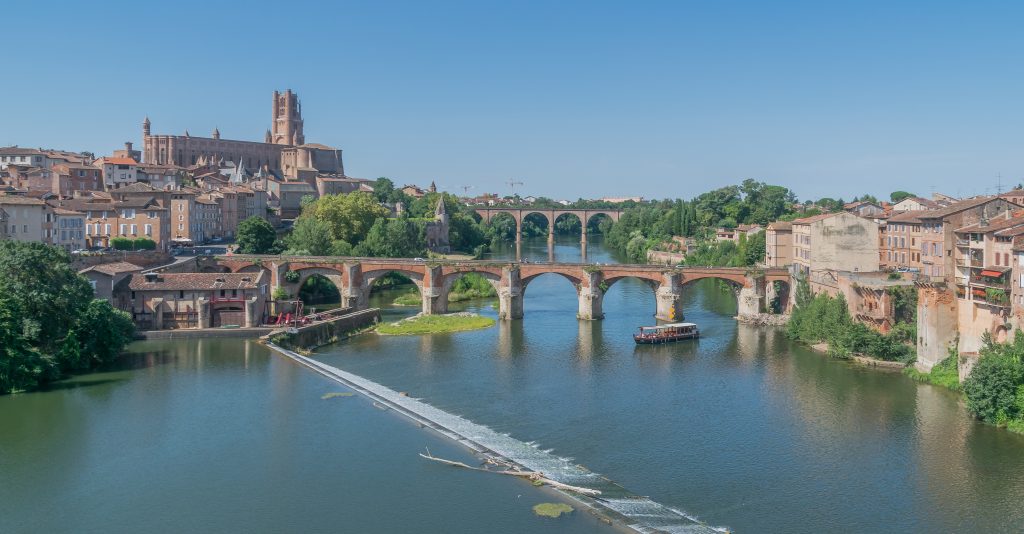
Albi is located in the north of Occitanie, 85 km from Toulouse, on a meander of the Tarn. The municipality covers 44.3 km² and ranges between 130 and 308 m in altitude. The historic city is organized around the episcopal city on the left bank, opposite the Madeleine district. The bridges — Pont-Vieux (11th–14th centuries) and modern structures — connect the two banks, while the hills offer views of the canal tile roofs and the fortified mass of the cathedral.
The pink brick construction, common to the former Languedoc (Toulouse, Montauban), gives Albi a very readable urban identity. The alluvial soils, proximity to the Cordes plateaus and Gaillac vineyards, and a transitional climate between oceanic and Mediterranean influences create an environment conducive to outdoor life for much of the year.
History and heritage: from the Albigensian Crusade to UNESCO inscription
The site of Albi has been occupied since Antiquity, but it was in the Middle Ages that the city asserted itself. After the crusade against the Cathars (13th century), episcopal power strengthened and the city was endowed with a unique monumental ensemble: Sainte-Cécile Cathedral (southern Gothic, 1282–1480), Berbie Palace (former bishops’ palace, 13th century), cloister and Saint-Salvi church, Pont-Vieux. Medieval urbanism and brick shape a landscape of religious power and commercial prosperity.
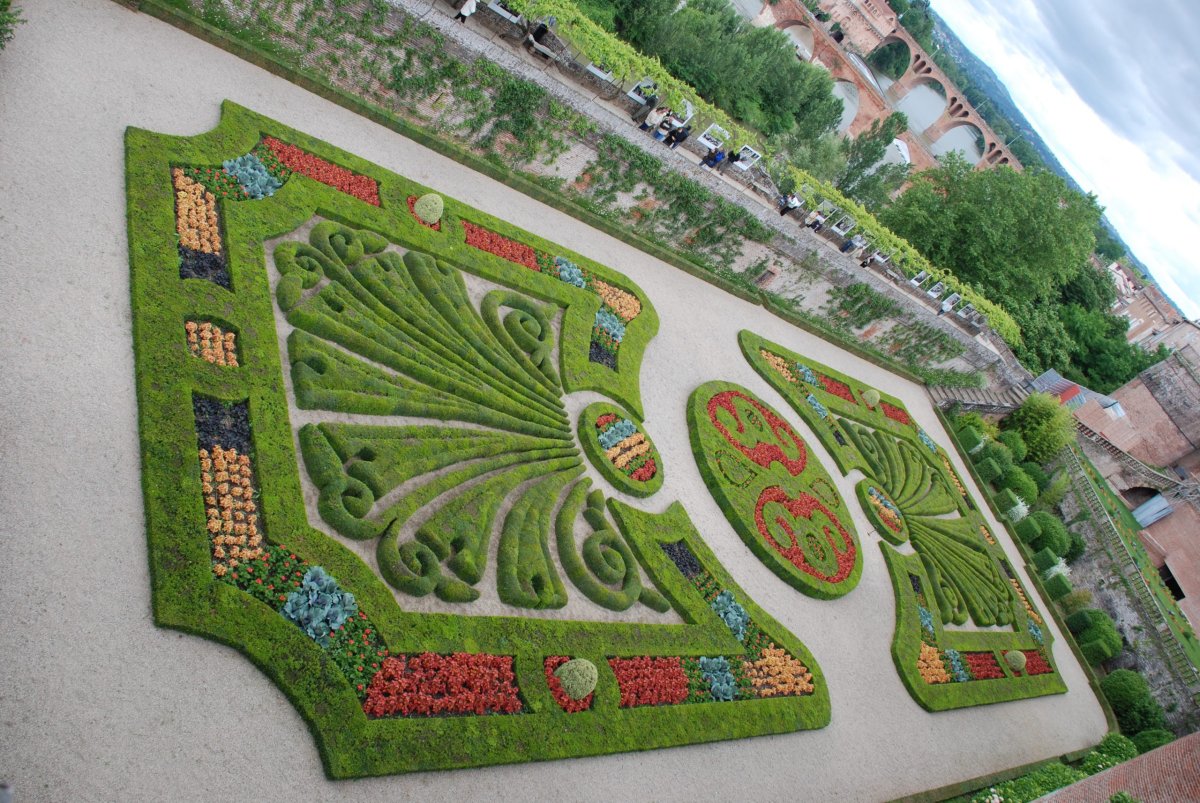
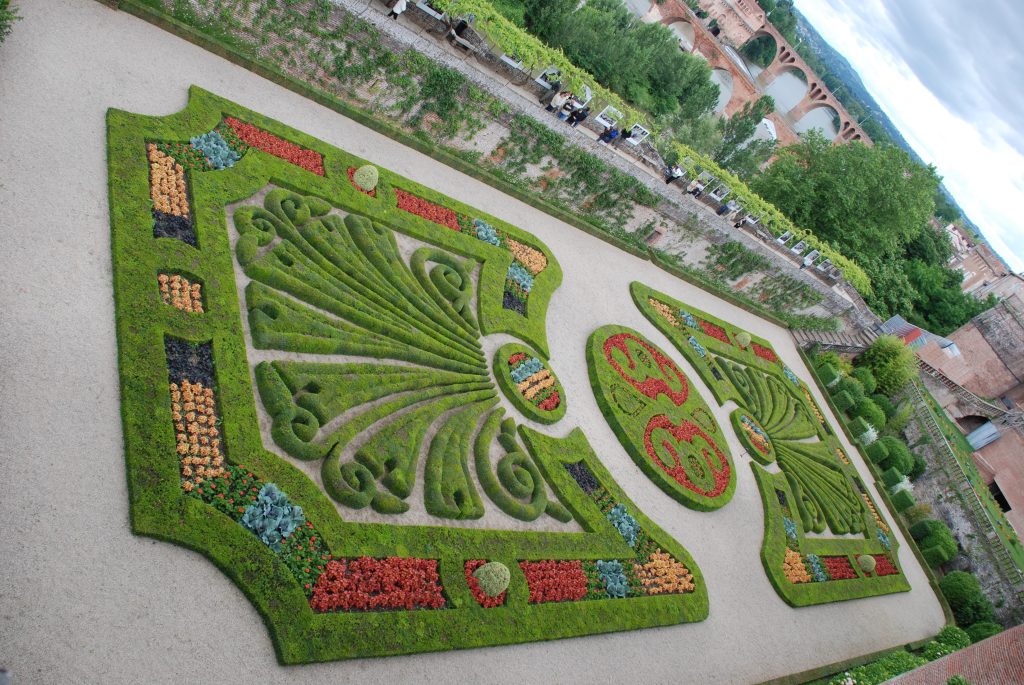
In 2010, UNESCO inscribed the episcopal city of Albi on the World Heritage List for the universal value of this coherent urban ensemble, where major monuments dialogue with the old fabric of overhanging houses and shopping streets. The Berbie Palace now houses the Toulouse-Lautrec Museum, dedicated to the artist born in Albi, and its French-style gardens overlook the river.
UNESCO — The episcopal city of Albi includes Sainte-Cécile, the Berbie Palace and its gardens, the Pont-Vieux, the district and the Saint-Salvi church. Dossier and map on the World Heritage Centre website.
Population and Demographics
Albi is the central city of an urban area with more than 84,000 inhabitants. The municipality has 50,605 inhabitants (2022), with a density of ≈ 1,143 inhabitants/km². Recent growth is moderate, driven by residential mobility, while the natural balance remains slightly negative, a phenomenon observed in many medium-sized cities.
| Indicator (INSEE) | Value | Year |
|---|---|---|
| Municipal population | 50,605 | 2022 |
| Area | 44.3 km² | 2022 |
| Density | ≈ 1,143 inhabitants/km² | 2022 |
| Average annual rate (2016–2022) | +0.5 % | 2016–2022 |
Source: INSEE — territory comparator, Albi.
Local Economy: Services, Higher Education, Tourism, Light Industry
The economy of Albi combines administration (prefecture, hospital), services, commerce, heritage tourism, and a network of industrial companies/SMEs. The IMT Mines Albi, a prestigious engineering school, trains sought-after profiles and drives applied research (materials and processes for aeronautics and space, renewable energies and biomass, powders/health/nutrition). This hub, combined with the proximity of the Toulouse metropolitan area, supports an innovation ecosystem accompanied by the association Albi-InnoProd and dedicated business locations (business hotel, technopole park).
Tourism is the other pillar, driven by UNESCO, the Toulouse-Lautrec Museum, a regular cultural program, and a coherent accommodation and dining offer suited for urban stays of 1 to 3 nights. At the regional level, Occitanie consolidates its overnight stays, with a significant share of French clientele and a summer peak.
Key points — IMT Mines Albi: prestigious school of the Institut Mines-Télécom with thematic research centers. Innovation ecosystem: Albi-InnoProd, business hotel (43 offices, public building with positive energy). Tourism: UNESCO heritage and sustained museum attendance.
Tourism and Culture: Top 7 Must-Sees 🎯
- Sainte-Cécile Cathedral — Southern Gothic brick monument, single nave, sculpted rood screen, and remarkable paintings.
- Berbie Palace & Toulouse-Lautrec Museum — Major collections of posters and works by the painter, French gardens above the Tarn. Official museum website.
- Saint-Salvi District and Cloister — Medieval layout, arcades, and shopping alleys.
- Pont-Vieux — Historic bridge (11th century, remodeled), panorama over the episcopal city.
- Banks of the Tarn — Walks, viewpoints, and departures for gentle water activities.
- Halls and Markets — Products from Tarn, Gaillac wines, charcuterie, cheeses.
- Cultural Agenda — Exhibitions, music, festivals; consult the Tourist Office.
Culinary specialties to taste
- Gaillac wines just a few kilometers away.
- Cold cuts and cheeses from Ségala and the Tarn hills.
- Croustade and local sweets.
Transport and access
Train: frequent TER connections Albi ↔ Toulouse with fast journeys in ≈ 53–64 min for the shortest; average around 1 hour. From Paris, connection via Toulouse (or sometimes Montauban) and travel time from 6 h 11 for the fastest depending on the day. Check schedules and prices on SNCF Connect.
By road: A68 from Toulouse, N88 towards Rodez/Lozère. City ring road and parking available.
Urban mobility: bus network (libéA), city center shuttles, bikes and easy walking in the UNESCO area. Practical information and advice on the Tourist Office website.
Travel sources: SNCF Connect Toulouse ↔ Albi; SNCF Connect Paris ↔ Albi. Local mobility: Tourist Office — getting around.
Local life: studies, sports, events
Higher education: IMT Mines Albi, IUT and university branches. Education: full offer from kindergarten to high school (Lapérouse, Bellevue…). Sports: rugby (SC Albi), water sports on the Tarn, municipal facilities. Events: exhibitions at the museum, festivals, markets, heritage activities.
Natural heritage and climate
The Tarn valley and surrounding hills form a landscape of terraces, meadows, woodlands and nearby vineyards (Gaillac). Oceanic-Mediterranean transitional climate, hot but breezy summers, moderately cold winters. The banks of the Tarn offer walking paths, and the city carries out renaturation and landscape enhancement actions around the shores and historic gardens.
Neighborhoods and experiences: reading Albi from a different angle
- Bishop’s city — Around Sainte-Cécile and the Berbie Palace, narrow streets and small squares.
- Saint-Salvi — Cloister, arcades, artisan shops.
- La Madeleine — Right bank, views of the cathedral, access to the Old Bridge.
- Shopping center — Place du Vigan, pedestrian streets and market halls.
- Banks of the Tarn — Walking/cycling routes, viewpoints and footbridges.
Recommended itinerary over 24–48 hours
Day 1: Sainte-Cécile (outside then inside) → Saint-Salvi cloister → lunch downtown → Berbie Palace and Toulouse-Lautrec Museum → gardens and panorama over the Tarn → sunset at the Old Bridge.
Day 2: walk along the banks and viewpoints → market and specialties → temporary exhibitions or themed guided tour → excursion to the Gaillac vineyard or nearby bastides.
Real Estate and Urban Planning
Heritage city and prefecture, Albi offers an old park in the city center (character apartments, townhouses), quiet residential areas, and occasional renovation or controlled densification programs. In 2025, observed prices often range around ≈ €2,300–2,500/m² depending on properties and neighborhoods, with marked differences based on condition, location, parking, and immediate proximity to the UNESCO sector or the riverbanks.
- UNESCO city center: heritage premium, sometimes atypical surfaces, variable stairs/elevators.
- Right bank (La Madeleine): cathedral views, balanced quality-price ratios.
- Nearby outskirts: individual houses, gardens, A68 access.
2025 trends: the recovery is mixed in France, with increases concentrated in large metropolitan areas and more heterogeneous medium-sized cities. For Albi, check recent barometers at the time of purchase. Ref.: market analyses and national barometers.
Practical Tips
- Period: spring and autumn for visiting comfort; summer for liveliness.
- Ticketing: museum and guided tours should be booked in advance during weekends and holidays.
- Soft mobility: compact center, favor walking and cycling; libéA buses to extend the range.
- Photography: best lighting in the morning and late afternoon on the right bank.
Useful Links and Official Sources
- UNESCO — Albi Episcopal City, official notice and documents (management plan, maps).
- INSEE — Local data Albi 81004.
- Toulouse-Lautrec Museum — official site.
- SNCF Connect — Toulouse ↔ Albi; Paris ↔ Albi.
- Tourist Office — Getting around Albi.
FAQ
Why is Albi Cathedral made of brick and has a “fortress” appearance?
Built after the crusade against the Cathars, Sainte-Cécile expresses episcopal power. A local material, brick shapes the southern Gothic style, massive on the outside and richly decorated inside.
What can be seen at the Toulouse-Lautrec Museum?
Reference collections of Henri de Toulouse-Lautrec (posters, paintings, drawings), displayed in the Berbie Palace with temporary exhibitions.
How long does it take from Toulouse?
The fastest TER takes about 53–64 minutes. Generally count around an hour depending on the time and service.
Can Albi be visited in one day?
Yes for the essential UNESCO sites (cathedral, Berbie, Pont-Vieux). Two days allow for the museum, gardens, and riverbanks without stress.
What real estate budget should be targeted?
In 2025, aim for an approximate range of €2,300–€2,500/m² depending on the neighborhood, condition, parking, and floor. Check the barometers at the time of the offer.