

Boarding school in high school is no longer the almost mandatory step it once was, but it remains a real solution for some families. When a student loses too much energy in transportation, lacks a framework to study, or needs to access a specialty far from home, the question becomes very concrete: why can boarding school in high school still change an educational path? The answer is neither magical nor uniform. It depends on the student’s profile, the actual cost, possible aid, and the capacity of the targeted high school.
Table des matières
In brief
🎒 Boarding school in high school primarily serves to secure daily life: fewer trips, fixed schedules, a more regular study framework, and a supervised communal life.
💶 In public boarding schools, annual fees generally range between 1,000 and 2,000 €, with possible aid for scholarship students or families in difficulty.
📌 The boarding school request is based on a file: educational project, family or geographical justification, administrative documents, and available places in the institution.
⚖️ Boarding school is not a shortcut to success. It works mainly when the student accepts communal life, the imposed rhythm, and progressive autonomy.
Why does boarding school in high school deserve to be reconsidered?
Boarding school in high school can be very relevant for students who need time, structure, or a lighter commute. Its interest depends as much on the student’s profile as on the actual cost, available aid, and chances of obtaining a place. Hence the importance of comparing before submitting a request.

In the collective imagination, school boarding still carries two somewhat caricatural images: the strict old-fashioned boarding school, or the very selective institution reserved for a few privileged students. In reality, boarding school in high school has become a more hybrid tool. It responds to very different practical, social, and educational constraints depending on the territories.
Historically, boarding school occupied a much more central place in French education. In 1850, more than one in two high school students was a boarder. Today, the proportion of boarding students in high school is about 3%. This decline does not mean that boarding school has lost its usefulness; it mainly means that it has specialized. It comes into play when schooling becomes difficult to organize otherwise.
According to the Ministry of National Education, boarding school aims to offer a favorable framework for academic and educational success, beyond simple accommodation. The institutional page on boarding schools in middle and high school emphasizes precisely this dual dimension: housing the student, yes, but also organizing their time for work, rest, and communal life.
Boarding school is only useful if it solves a real daily problem: distance, fatigue, lack of structure, or the need to access a distant training program.
That is why boarding school in high school deserves to be reconsidered without nostalgia or fantasy. It is not made for all students, and that is perfectly fine. But for certain profiles, it allows transforming a endured schooling into a more stable, clearer, and sometimes more breathable path.
For which profiles is boarding school really relevant?
Boarding school is particularly suited to students who live far from their high school, enrolled in a rare program, tired from commuting, or needing a stable environment to study. It can also help when family organization makes school follow-up complicated, provided the student accepts communal living.
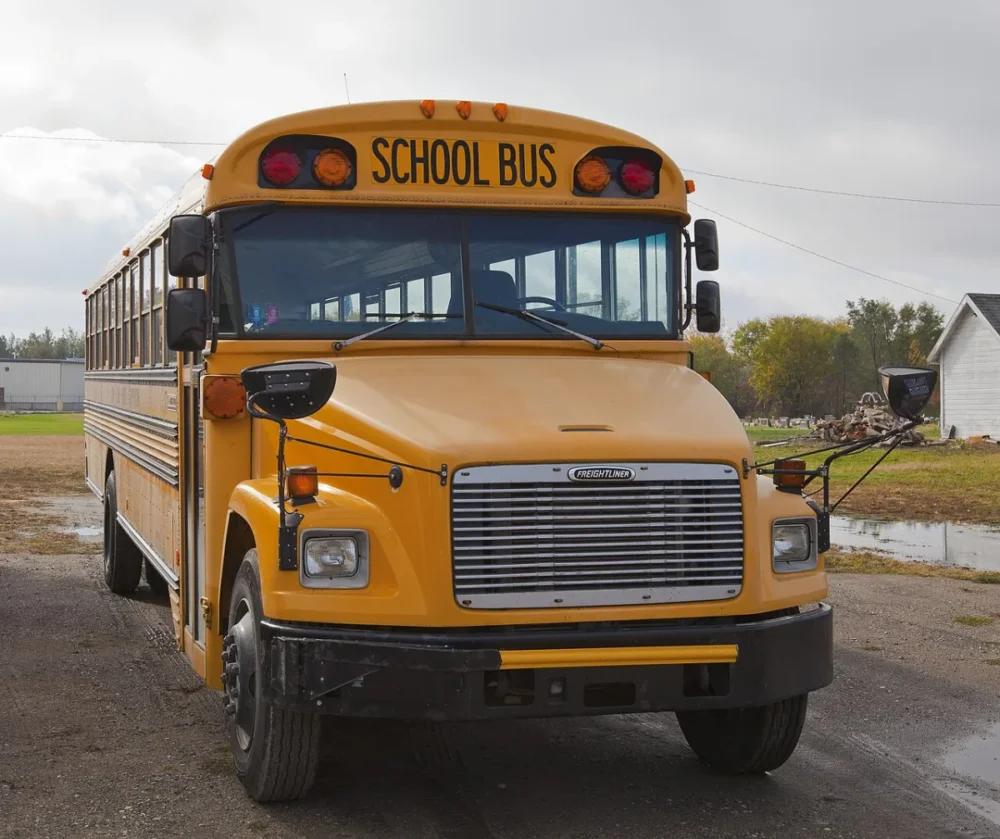
The first profile, the most obvious, remains that of the student who spends too much time commuting. In isolated rural areas, public boarding schools often play a role in access to education: they allow students to follow a program without imposing exhausting daily trips. This is not a minor detail. An hour or more morning and evening, over an entire school year, ends up weighing on sleep, concentration, and motivation.
Available figures support this: 58% of public high schools offer boarding in France, and this proportion rises to 90% in isolated rural areas. In other words, boarding school is not just an educational option; it is also a territorial response to the distance from schools and specialties.
The second profile concerns students who need a stable environment. Not necessarily “struggling” students, be careful. Some succeed adequately but get distracted at home: phone, trips, fatigue, atypical family schedules, lack of quiet space. Boarding imposes a clearer routine, with meals, study times, and more regulated bedtime hours.
It is observed in the field that families do not always request boarding to “fix” a school situation. Many simply seek to protect a high school student’s sleep time and study time whose days have become too fragmented.
The third profile is more sensitive: complicated family or logistical situations. Boarding can secure schooling when the family environment is not conducive to work, or when parents’ schedules make daily organization fragile. However, one must avoid the false good idea: boarding does not replace appropriate educational or social support. It can help, but it does not solve everything.
In the public sector, the majority of boarders are often vocational track high school students from working-class backgrounds, sometimes far from their specialty. In large urban areas, the profile may be different: a typical boarding student is more often from a privileged social background and enrolled in a private boarding school. This contrast reminds us of an essential fact: public boarding schools and private boarding schools do not always follow the same logics.
Signs that boarding might be a good option
- The daily commute tires the student to the point of reducing their sleep or study time.
- The targeted specialty or program is far from the family home.
- The study environment at home is too unstable, noisy, or unpredictable.
- The student is willing, even with normal initial concerns.
- The family accepts a more collective organization, with less daily improvisation.
How much does boarding cost in high school and what do you really pay for?
In public boarding schools, annual fees generally range between €1,000 and €2,000. This amount most often covers accommodation, meals, and supervision of daily life. In private schools, the price can be significantly higher, depending on the level of services, the educational project, and the institution.
The term “full board high school” may give the impression of a simple package. In practice, you need to look at what is included: overnight stays, breakfasts, dinners, sometimes meals on Wednesday or Friday, access to supervised study, activities, possible laundry, or additional fees. Joking aside, it is often in the fine print that budget differences hide.
In a public boarding school, the price is generally regulated by the institution and the relevant local authorities. Annual fees often range between €1,000 and €2,000, but you should check the exact amount with the targeted high school, as conditions vary depending on the academies, periods of attendance, and included services.
Financial aid can reduce the bill. Scholarship students may benefit from a boarding school allowance, and a social fund can be mobilized under certain conditions. Families are advised to check the updated rules on the Service-Public.fr page dedicated to high school scholarships, then directly with the school’s administration office.
| Solution | Typical Cost | What It Provides | Points to Watch |
|---|---|---|---|
| Public boarding school | Generally €1,000 to €2,000 per year | Accommodation, meals, study environment | Limited places and allocation criteria |
| Private boarding school | Variable, often higher | Specific educational project, enhanced supervision depending on cases | Sometimes significant out-of-pocket costs |
| Half board | Less expensive than boarding school | Lunch meals and staying at home | Does not solve long commutes |
| Adapted family arrangement | Variable | Flexibility and family presence | Strongly depends on schedules and transport |
The right calculation is not only financial: you need to compare the price of boarding school with the invisible cost of fatigue, transport, and disorganization.
How to apply for boarding school at high school without missing deadlines?
To request a place in a boarding school, you must contact the targeted high school, check the admission conditions, and prepare an application within the indicated deadlines. The file must explain the educational project, the geographical or family situation, and include the requested documents. The decision then depends on the available places.
The first mistake is to wait until final enrollment to ask the question. Bad plan. Boarding school is often prepared at the same time as orientation, especially if the student is aiming for a professional, technological, or specialized track far from home. The right reflex is to identify possible high schools, then very early check if they have a boarding school and under what conditions.
Depending on the situation, the contacts may be the host high school, the original institution, academic services, or the departmental education services management. Exact rules may vary, but the logic remains the same: show that the request is consistent with the student’s educational path and constraints.
Documents and arguments to prepare
- The educational project: requested track, specialty, motivation, consistency with orientation.
- The geographical constraint: distance, transport, fatigue, lack of a realistic daily solution.
- The family situation: schedules, organization, need to secure schooling.
- Administrative documents: proofs requested by the high school, scholarship application if necessary.
- The student’s motivation: ability to live in a community, autonomy, acceptance of rules.
It should be noted that all willing students can, in principle, request admission. But request does not mean guaranteed place. Capacity remains limited, and some institutions prioritize students who live far away, scholarship holders, enrolled in a rare program, or facing a particular situation.
Boarding schools of excellence, created as part of the Espoir Banlieue plan in 2008, illustrate this targeting logic. In 2019, the “Boarding School of the 21st Century” program was launched with 240 projects for 13,000 young people. More recently, 305 new boarding schools of excellence have been labeled to accommodate 13,000 additional students. These measures show that boarding school remains an educational policy tool, not just a housing service.
What boarding school changes daily for the student
The most visible change is the rhythm. The student no longer goes home every evening, no longer depends on the same commute, no longer works only when they have the energy. The days become more structured, sometimes more predictable. For some high school students, this regularity is a relief. For others, it may initially feel like a loss of freedom.
In a school boarding house, daily life is based on rules: schedules, study, meals, attendance, outings, phone usage depending on the institution. This framework can promote academic autonomy, provided it is not experienced as a pure constraint. In other words, boarding school teaches organization, but it does not do the work for the student.
Socialization is the other major dimension. Living with other students requires managing noise, differences in rhythm, minor conflicts, shared rooms or common rules. The icing on the cake is that it can develop real skills: punctuality, respect for spaces, ability to ask for help, management of materials and homework.
But the limits must be discussed. Being away from family can be difficult, especially at first. Some students struggle with weeknights, lack of privacy, or the feeling of being “stuck” in the institution. In practice, an adjustment period is normal. If the discomfort persists, the solution must be reassessed with the school life team, the family, and the student.
Public boarding school, private or other solution: how to decide?
The right choice depends on three simple questions: what problem are we trying to solve, what level of structure can the student accept, and what budget can the family realistically afford? If the main problem is transportation, public boarding school can be very relevant. If the problem is only a lack of organization in the evening, a half-board or academic support may sometimes suffice.
One should not automatically oppose public and private boarding schools. The public sector often fulfills a strong social and territorial function, especially for distant students or those enrolled in vocational tracks. The private sector can offer different supervision, sometimes more individualized, but often at a higher cost. Cherry on the cake: the “best” boarding school is not necessarily the most reputed, it is the one that corresponds to the real need of the student.
Before deciding, it is better to visit the institution if possible, request the boarding school rules, check study hours, understand permitted outings, and ask very concrete questions. Where does the student work in the evening? How many are there per room? Who supervises the studies? What happens in case of health problems, conflicts, or dropping out?
Questions to ask before enrollment
- What is the exact annual fee and what does it include?
- What aid can be requested and when?
- How many places are available for the targeted level?
- What criteria are used to allocate places?
- How are study, rest, and outing times organized?
- Is there an adaptation period or specific support?
Conclusion: a useful solution, but not universal
Why does boarding school in high school remain useful? Because it addresses very concrete problems that school alone cannot always absorb: distance, fatigue, access to a program, need for structure, fragile family organization. But it should not be asked to give more than it can. Boarding school creates more favorable conditions; it guarantees neither success nor automatic well-being.
To make the right choice, it is therefore necessary to reason in three steps: check if boarding school solves a real problem, calculate the actual cost after aid, then submit a well-argued application within the deadlines. Overall, it is a demanding option, but still very useful when it matches the student’s profile.
Key takeaways
- 🎒 Boarding school in high school is especially helpful when distance, fatigue, or school environment pose a problem.
- 💶 In public schools, the annual cost generally ranges between €1,000 and €2,000.
- 📌 A solid application explains the educational project, constraints, and the student’s motivation.
- 🧭 Places remain limited: it is necessary to anticipate and compare several institutions.
- 🤝 Collective life can strengthen autonomy, but requires a real capacity to adapt.
FAQ
Can boarding school be requested even if the student is not struggling academically?
Yes. Boarding school in high school does not only concern students in difficulty. It can be requested to reduce travel, access a distant specialty, or offer a more regular work environment to an already motivated student.

Is a boarding place guaranteed if the high school has one?
No. Even if a high school has a boarding facility, places may be limited. Criteria often take into account distance, family situation, educational project, and sometimes scholarship status.
Do aids cover the entire cost of boarding school?
Not always. The boarding allowance and social fund can reduce the bill, but some out-of-pocket expenses may remain. It is necessary to request an estimate from the high school before confirming enrollment.
Is boarding school suitable for a very anxious student?
It depends on the origin of the anxiety and the support offered. Boarding school can reassure thanks to its structure, but family separation and collective life can also be difficult. A prior visit and discussion with the school life staff are strongly recommended.
When should the steps for boarding school registration begin?
As early as possible, generally at the time of orientation choices. Ideally, contact the targeted high schools before finalizing placement to know the deadlines, required documents, and chances of obtaining a place.