
In Pontoise, as in any city, the loss of a loved one often requires quick decisions, even as emotions take over completely. This article is designed as a local guide: it explains the essential steps, the possible choices (burial or cremation), and the points of vigilance to compare funeral services without feeling lost.
Whether you live in the historic center, near the banks of the Oise, or in the Cergy-Pontoise urban area, the goal remains the same: to move forward step by step, with understandable information and respectful support.
Table des matières
Finding funeral services in Pontoise: where to start in the city?
When you don’t know where to start, a simple method helps: secure the essentials (declaration, transport, choice of a place of gathering if needed), then organize the ceremony and formalities. Concretely, you can contact a local agency and request an initial discussion to frame the options. If you are looking for a contact point in Pontoise, you can consult the funeral services agency roc-eclerc.com in Pontoise to obtain information on the services offered and a quote.
On the web, many people type “funeral services + city” to quickly identify a team available near them. It’s a useful reflex… provided the search is supplemented by some concrete questions: availability 24/7, clarity of prices, quality of listening, solutions for the ceremony, and ability to handle administrative procedures.
To know (simple and reassuring)
- You have the right to request a quote and ask all your questions, even “basic” ones.
- You can compare several proposals with equivalent services.
- A good agency clearly explains what is mandatory, what is recommended, and what is optional.
The first steps after a death: the “24–48 h” checklist
Deadlines and exact procedures vary depending on the situation (death at home, hospital, institution, or public place), but the order of steps is generally the same. The idea is not to do everything alone: funeral services can take care of a large part of the formalities, while explaining to you what is done and why.
1) Have the death certified and obtain the basic documents
- Medical certificate: a doctor issues the death certificate, essential for the next steps.
- Useful documents: identity card of the deceased, family record book, civil status information, and if possible elements about wishes (written, funeral contract, family exchanges).
2) Declare the death at the town hall
The declaration is made at the town hall of the place of death. In many cases, the funeral company makes this declaration for you, then provides you with the necessary certificates (bank, inheritance, insurance, employers, social organizations). If you prefer to do it yourself, check the hours of the relevant service and the documents to present.
3) Choose the general organization: burial or cremation
This choice can be guided by the wishes of the deceased, a family tradition, an existing plot, or simply by what makes sense to you. The important thing is to know that both options allow for a dignified and personalized ceremony, including distinct moments of reflection: civil ceremony, religious ceremony, tribute at the crematorium, urn placement, etc.
4) Informing relatives and organizing the “human” time
The usefulness of a “relay” person is often underestimated: a close one who centralizes calls, notes requests (flowers, texts, music) and spares you from being continuously solicited. This is also the time to decide if you want an announcement in the press, an online condolence page, or a printed notice.
5) Anticipating logistics (and avoiding surprises)
- Transport: who is coming from far away, who is driving, who is accompanying elderly people?
- Accessibility: stairs, parking, walking, needs for a wheelchair.
- Realistic schedules: a slot too early or too late can exhaust everyone.
Burial or cremation around Pontoise: understanding the options
Pontoise is a municipality in Val-d’Oise, on the banks of the Oise River, in the heart of the Cergy-Pontoise urban area. This location facilitates access to funeral facilities in the area (cemeteries, places of worship, crematorium depending on the case). In practice, it is often availability (slots, delays, capacity) that guides the organization.
Burial: what to anticipate
- The place: existing plot, request for a plot, or family plot. Rules may vary depending on the municipality.
- Authorizations: the agency guides you on the necessary authorizations (burial, transport, opening of the grave).
- The coffin: it must comply with current standards; certain options (wood type, finishes) affect the budget.
- The monument: it can be installed later. Allow for a delay (notably for ground stabilization).
Cremation: typical procedure
- Tribute: a ceremony can be held in a dedicated room, with music, speeches, photo projections.
- Cremation: it takes place afterward; the team explains the procedure and the timelines.
- Destination of the urn: columbarium, vault, sealing, or scattering in a memorial garden (according to regulations).
Good to know: cremation does not mean “doing it simpler.” Many families build a complete ceremony, then choose a lasting memorial place (columbarium, plaque, memorial garden).
What if the family is divided?
When opinions differ, a support point helps: first seek the wishes of the deceased (written, contract, discussions). Failing that, some families choose a “two-step” solution: a joint ceremony, then a choice of memorial place that best respects everyone (for example, an accessible columbarium, or a family grave).
How a funeral company concretely supports you
A funeral home acts like a discreet conductor. It coordinates the participants (town hall, place of worship, cemetery, crematorium, stonemason, florist) and ensures regulatory aspects are secured. In Pontoise and neighboring towns, this coordination is valuable to avoid oversights and spare you from mental overload.
Authorization: an important reference point
In France, funeral operators must be authorized. If you have any doubt, simply ask for confirmation: a reputable agency will respond without hesitation and explain what this covers (organization, transport, funeral home, etc.).
The estimate: the basis of a transparent relationship
The estimate should allow you to distinguish what is mandatory (certain regulatory services) from what is optional (ceremony, flowers, notices, care, type of ceremony). Do not hesitate to ask for:
- a detailed breakdown by item;
- third-party fees (cemetery, crematorium, taxes) separated from the agency’s services;
- simple explanations about what can be adjusted without compromising the dignity of the tribute.
Gathering: funeral home, home, or other solution
Depending on the circumstances, a time of gathering may take place:
- at home (when possible and desired);
- in a funeral home (often more practical for hosting family);
- in a place of worship or a dedicated room, in connection with the organization of the ceremony.
A good question to ask: “What is the simplest and most comforting option for us, concretely?” The goal is not to “check boxes,” but to avoid unnecessary fatigue.
Preservation care: when is it useful?
Preservation care (often called “presentation care”) may be offered in certain situations, especially if a time of gathering is planned and conditions require it. It is not systematic. Ask for a clear explanation: in which cases it is recommended, what alternatives exist, and what the cost is.
D-Day: simple (and reassuring) ceremony flow
- Welcome: arrival of relatives, practical instructions, seating.
- Opening: introductory word, reminder of the framework (civil/religious), announcement of the outline.
- Tribute: speeches, texts, music, slideshow if desired.
- Final gesture: laying of flowers, candle, message, moment of silence.
- Exit: transition time (thanks, information on what follows: burial, cremation, urn deposit).
This structure avoids improvisation and allows relatives to feel “supported” by a framework, without rigidity.
Focus: the Roc Eclerc approach in Pontoise (network, listening, transparency)
Roc Eclerc is a national network of funeral homes present in many French cities. The brand supports families in the complete organization of funerals (burial, cremation, ceremonies), offers funeral pre-planning contracts, and emphasizes price transparency, with human and professional support at every step.
In practice, families often look for three things: to be heard (without pressure), to understand the budget (clear quote, explained options), and to feel supported (a reachable contact person, guided steps). The challenge remains that you stay the decision-maker: we propose to you, we explain, and you choose.
What budget to plan for in Pontoise? (Indicative) benchmarks to avoid navigating blindly
The cost of funerals varies depending on the choice (burial/cremation), third-party fees, type of ceremony, and selected options. The amounts below are orders of magnitude: they mainly serve to help you ask questions and compare quotes with equal services.
The items that most often weigh on the quote
- Organizational services: procedures, coordination, provision of personnel.
- Coffin: this is an important line, with variations depending on the models.
- Transport: funeral vehicle, possible transfers.
- Third-party fees: crematorium, cemetery, taxes and fees (variable depending on the situation).
- Ceremony: room, sound system, master of ceremony, possibly broadcast/slideshow.
- Stonework: monument and associated works (often decided later).
Compare without mistakes: the “2 quotes” method
To see clearly, ask for two versions:
- Base quote: the essential, compliant and simple.
- Ceremony quote: the base + what makes the tribute more personalized (flowers, music, notices, room, options).
You immediately identify what is adjustable, and you avoid the feeling of “all or nothing”.
Avoid unnecessary expenses (without doing “cheap”)
- Limit the number of vehicles to the strict necessary.
- Choose a simpler but symbolic floral arrangement (one color, a meaningful flower).
- Prefer a short, well-structured ceremony rather than a long and scattered one.
- Postpone certain decisions (monument, engraving, works) when the emotional urgency has passed.
Choosing your funeral home well in Pontoise: criteria and questions to ask
In a city, proximity matters, but it is not the only criterion. Here is a simple checklist, usable during a first call or meeting:
Availability and organizational capacity
- Is there a 24/7 on-call service and a rapid response?
- Who will be your main contact person?
- What are the usual delays to obtain a ceremony slot (cemetery/crematorium/place of worship)?
Price clarity
- Does the quote clearly distinguish services and third-party fees?
- Are the options (flowers, music, obituary notices) priced separately?
- Are you given time to review, ask questions, and compare?
Listening quality and personalization
- Are you offered a “à la carte” ceremony (texts, music, slideshow, speeches)?
- Can you plan a more intimate moment (small group) followed by a larger tribute?
- Is the team comfortable organizing a civil, religious, or mixed ceremony?
The “small” details that say a lot
- They call you back quickly and speak to you simply.
- They rephrase your requests to make sure they understood correctly.
- They don’t push you toward the most expensive option “by default.”
Composing a ceremony that reflects the deceased: simple (and often soothing) ideas
We sometimes believe we must “do it right” without really knowing what that means. In reality, a successful ceremony is often a coherent ceremony: a few correct choices, rather than an accumulation of options. Here are some ideas that work well, even when time is short:
- A four-part structure: welcome / words of tribute / musical moment / final gesture (flowers, candle, message).
- Two or three speeches maximum: this avoids emotional exhaustion and leaves room for reflection.
- A symbolic object: a book, a photo, a scarf, a bouquet from the garden, placed near the coffin.
- A short playlist: 3 to 5 pieces are enough; the music carries the silences.
What if children are present?
Children perceive everything, even when we think we are protecting them by avoiding the subject. A useful approach is to:
- explain in simple words what will happen (where, when, how long);
- offer them a very light role (placing a flower, bringing a drawing);
- arrange for a “buffer” person who can take them out if the emotion becomes too strong.
A tribute rooted in Pontoise (without being “touristy”)
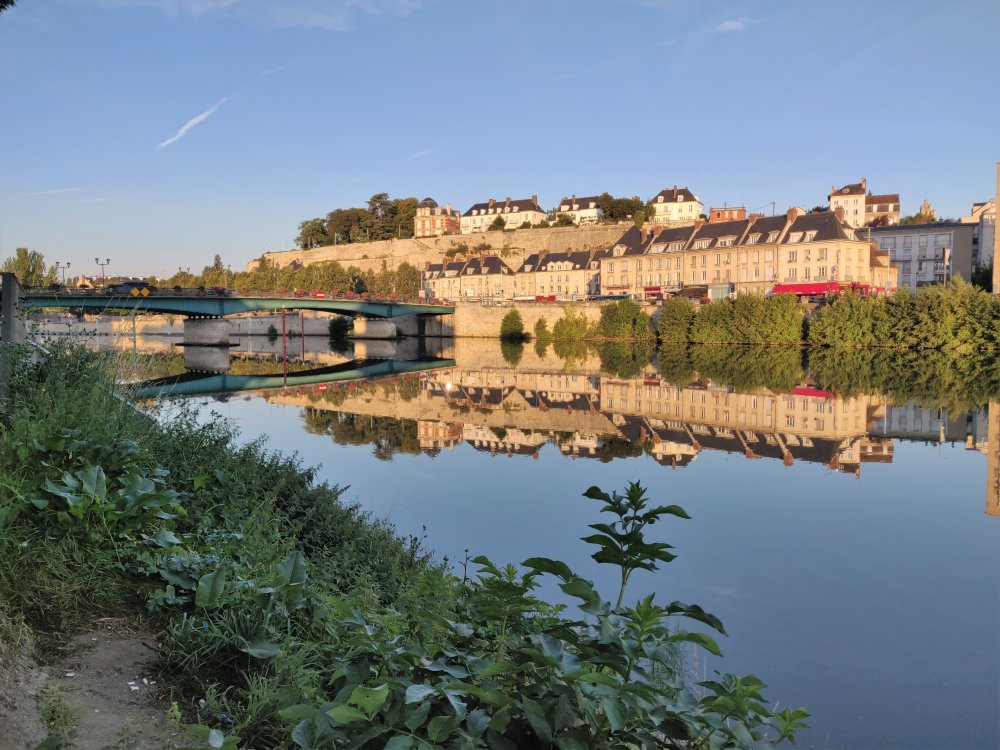
The heritage and landscapes of a city can become memory landmarks: a riverbank, a bridge, an alley, a viewpoint. In Pontoise, the banks of the Oise and the old town sometimes offer images that help loved ones tell a life story simply, without a long speech.
After the funeral: procedures not to forget (without overloading yourself)
Once the ceremony is over, there remains a “second wave” of formalities. Again, the idea is to proceed by priorities and get help if necessary (notary, bank, insurance, employer, pension funds).
In the first week
- Obtain several death certificates (paper or digital depending on the organizations).
- Notify the employer, bank, insurance companies, mutual insurance, and pension funds.
- Check ongoing contracts (rent, energy, subscriptions) and arrange cancellations.
In the first month
- Organize inheritance matters (often with a notary).
- Update administrative files (CAF, taxes, benefits).
- Revisit postponed decisions (monument, engraving, destination of the urn) when the pressure subsides.
An “anti-exhaustion” tip
Keep a folder (paper or digital) with all the supporting documents and a tracking table (organization / date / contact / action). When fatigue sets in, this prevents having to repeat the same procedure three times.
Anticipate to protect your loved ones: funeral planning and wishes
Talking about planning is unpleasant, but it is often an act of protection: it relieves loved ones from difficult decisions and secures a budget. Specifically, a funeral planning contract can allow you to:
- define in advance the type of ceremony (civil or religious), burial or cremation;
- specify simple wishes (music, text, flowers, notices, attire);
- provide dedicated funding, according to the chosen plan.
Warning point: as with any contract, read the conditions (payment terms, covered services, adjustment, portability). The important thing is not to anticipate “perfectly,” but to leave clear guidelines.
A useful “mini-document” (one page)
If you want to keep it simple, write a dated page with:
- your wishes (burial/cremation, civil/religious ceremony);
- 2–3 choices of music/text;
- the list of people to notify;
- the place where important documents are stored (contracts, identity, insurance).
This document does not need to be perfect: it serves as a compass for your loved ones.
FAQ – Funeral services in Pontoise: the questions we really ask
Can a civil ceremony be organized in Pontoise?
Yes. A civil ceremony can be held in a gathering room (depending on available facilities) or in a suitable location. Funeral services will guide you towards realistic and available options.
How much time do we have to organize a funeral?
Deadlines are regulated and generally short. In practice, the agency helps you secure a slot compatible with regulations and availability (cemetery, crematorium, place of worship).
Is it mandatory to go through a funeral home?
No. It depends on the place of death, the wishes of the family, and logistical constraints. A funeral home room can be useful to allow those close to the deceased to pay their respects in good conditions, but it is not systematic.
How to avoid unnecessary expenses?
By requesting a detailed quote, distinguishing the essential from the optional, and comparing equal services. A good agency explains the alternatives (flowers, number of vehicles, certain ceremony choices) without judgment.
Can roles be divided among several relatives?
Yes, and it is often a good idea: one person handles the procedures, another the ceremony (texts/music), another the logistics (reception, transport). This prevents one person from bearing everything alone.
Who to contact in case of doubt about an administrative procedure?
Start with the funeral agency (which handles these procedures daily), then supplement with the town hall, a notary, or the relevant organization. It is better to ask a question “too early” than to correct a file “too late”.
Useful resources (official and practical links)
- City of Pontoise – Death declaration (practical information)
- Val-d’Oise Crematorium and Memorial Park (Saint-Ouen-l’Aumône) – contact details
In conclusion: moving forward step by step, in Pontoise, with the right landmarks
Organizing a funeral in a city like Pontoise means dealing with emotion, deadlines, procedures, and personal choices. Good funeral support is recognized by its ability to explain, propose, and respect your decisions, with real transparency about costs. Take the time to ask your questions, request a clear quote, and build a ceremony that reflects the deceased: this is often what helps most to get through the moment.