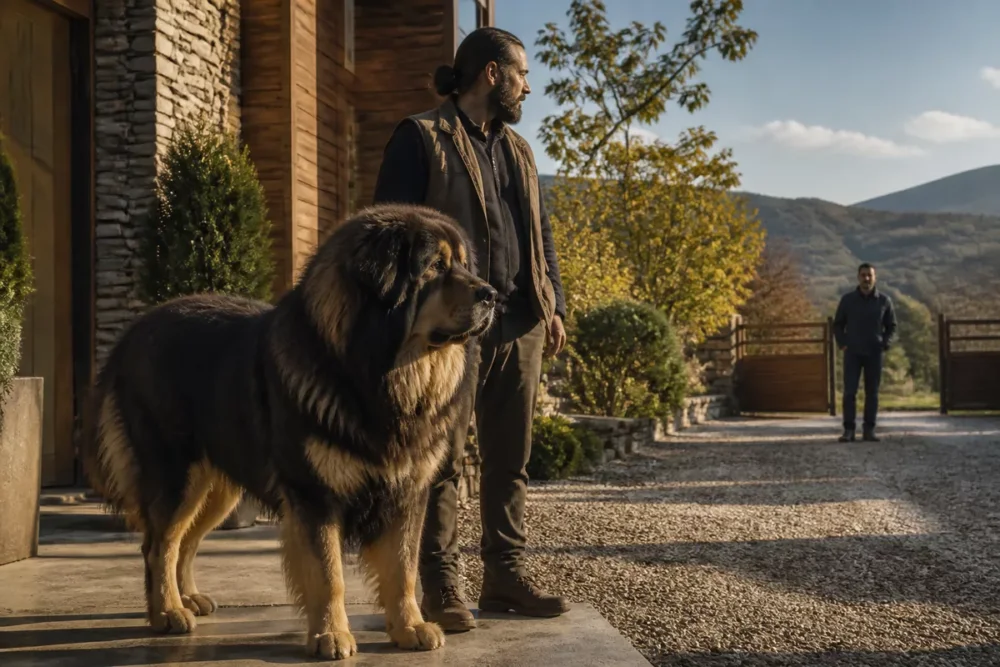
Tibetan Mastiff: Character, Training, Price, and Tips for Living Well with This Breed
The Tibetan Mastiff is a giant dog, independent and very protective. Its character combines strong territorial vigilance, a certain reserve towards strangers, and a genuine attachment to its family. This breed may suit an experienced, available household capable of managing a large dog, but it requires early socialization, a stable environment, and consistent rules.
The character of the Tibetan Mastiff is therefore not limited to its imposing appearance or its image as a Tibetan guard dog. The goal is to understand its temperament, lifestyle, training, care, health needs, and the budget to plan before adoption or purchase.
Table des matières
In brief
- 🐕 The Tibetan Mastiff is a giant, autonomous, and territorial dog.
- 🏠 A secure garden helps manage its size but does not replace walks or family life.
- 🎓 Puppy socialization and non-coercive training are priorities to limit excessive distrust.
- 💶 The Tibetan Mastiff price varies greatly depending on the breeder, documents, health, and support offered.
- 🩺 Growth, nutrition, and health issues must be monitored with a veterinarian.
Tibetan Mastiff: the essentials to remember before committing
The Tibetan Mastiff, also called Tibetan Mastiff or Do-Khyi, is a giant dog breed historically selected for guarding herds, homes, and certain communal places in the Himalayan regions. The term “guard dog” describes a selection function, not permission to let the animal decide alone how to handle visitors.
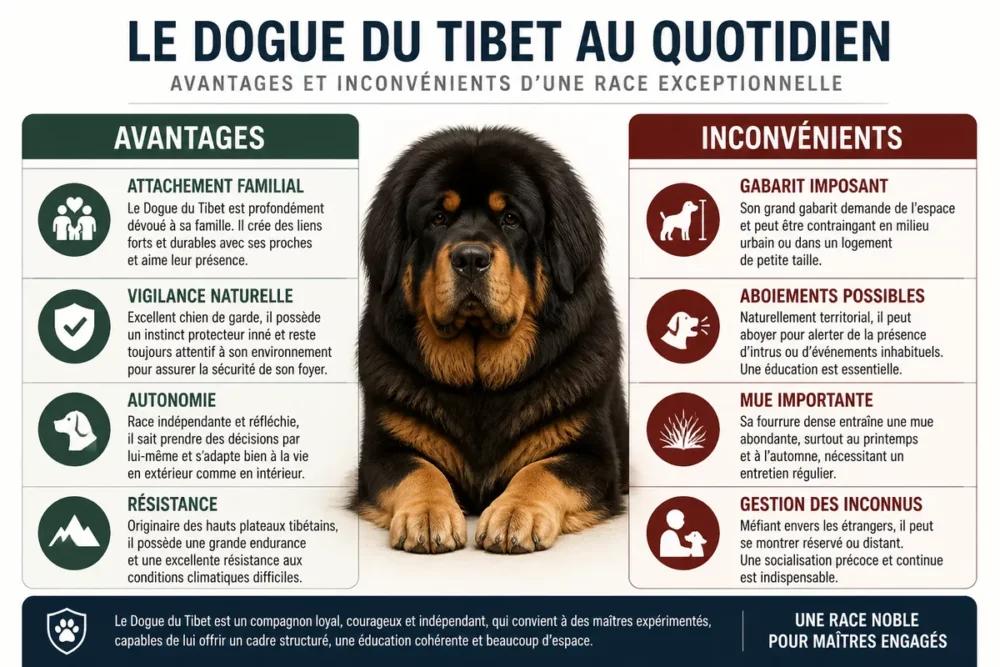
The Tibetan Mastiff is especially suitable for an experienced, present owner capable of anticipating guarding situations. Its size, heavy shedding, barking, wariness of strangers, and need for a reliable fence can complicate daily life for an unprepared household.
A Tibetan Mastiff must be chosen for the compatibility of its temperament and needs with the household, never for its spectacular appearance alone.
The breed can present great qualities: attachment to the family, resilience, autonomy, calmness in certain situations, and the ability to observe its environment. However, wariness is not synonymous with aggression. Behavior also depends on genetics, socialization, lived experiences, environment, and management.
The profile of the Tibetan Mastiff in a few key points
- Giant dog with slow physical and behavioral maturation.
- Generally independent, protective, and reserved temperament.
- Needs regular interaction with humans, even if it does not constantly seek contact.
- Requires strict management of visitors, fences, outings, and interactions with other animals.
Meeting several adult dogs is particularly useful before reserving a puppy. A veterinarian, qualified dog trainer, or behaviorist can also help assess the consistency between the family project and the breed’s constraints.
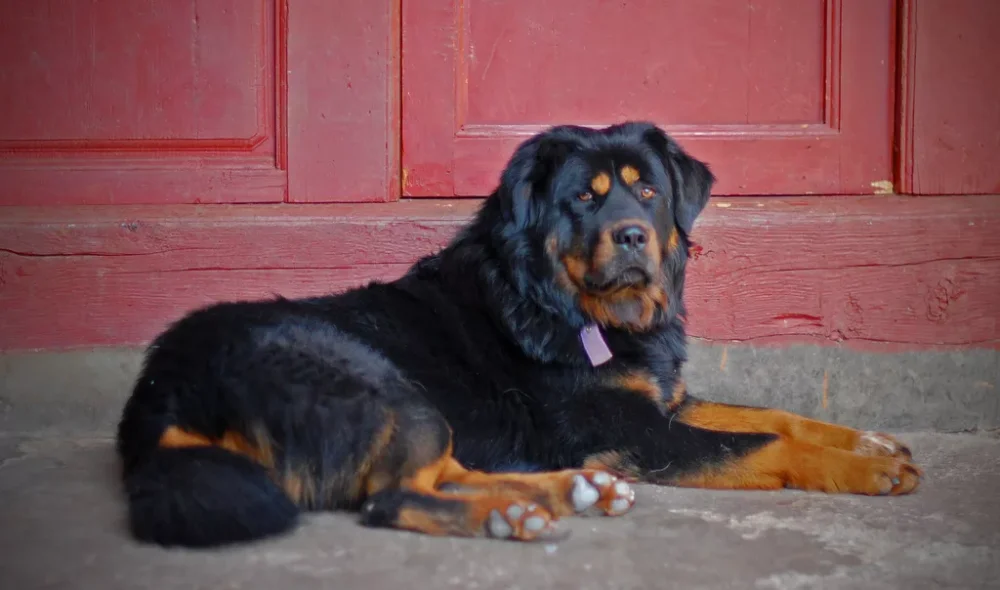
Origins, size, and physical characteristics of the Tibetan Mastiff
The Tibetan Mastiff is an ancient guard breed associated with the Asian high plateaus. Stories present it as close to nomadic populations, herds, and isolated dwellings. The region of origin and traditional uses are generally documented, but the precise history of the breed’s creation and its exact dating remain difficult to establish with certainty.
An ancient guard breed of the Asian high plateaus
The historical selection of a dog tasked with alerting and deterring can explain several traits observed in the Tibetan Mastiff: alertness to sounds, observation of movements, autonomy in decision-making, and caution with strangers. These tendencies alone do not allow for predicting an individual’s behavior.
The flattering nicknames sometimes associated with the breed are more descriptive or marketing-oriented than scientific classification. The Fédération Cynologique Internationale is the source to consult to verify the official standard and breed recognition, especially before comparing the characteristics announced by a seller.
A giant dog with late development
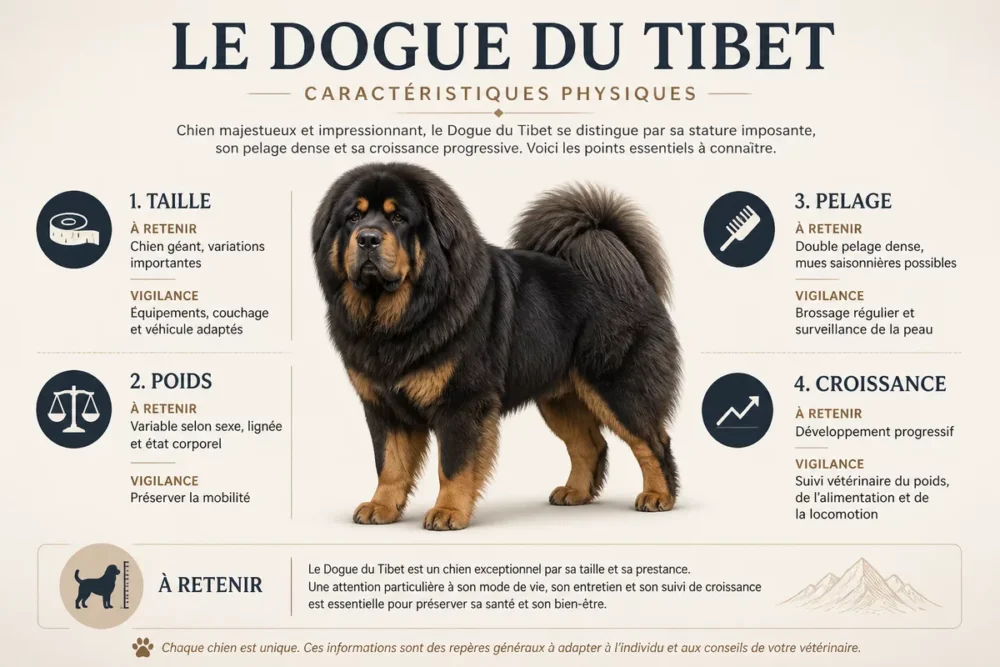
Size and weight indications vary according to sex, lineage, morphology, and body condition. Breed sources often mention a height at the withers over 60 cm in many adults, but these values should remain indicative and be compared to an official standard or a professional’s opinion.
| Element | Key points to remember | Practical caution |
|---|---|---|
| Size | Giant dog, with significant variations between individuals | Plan for suitable equipment, bedding, and vehicle |
| Weight | Highly variable value depending on sex, lineage, and body condition | Avoid seeking high weight at the expense of mobility |
| Coat | Dense double coat with marked seasonal shedding in some dogs | Organize regular brushing and monitor the skin |
| Growth | Progressive development, particularly important in a giant dog | Have weight, diet, and locomotion monitored by a veterinarian |
The growth of a Tibetan Mastiff puppy should not be accelerated with non-prescribed supplements or excessive rations. Slippery floors, repeated jumping, and intense efforts can also increase strain on the locomotor system. Veterinary monitoring allows adapting recommendations to age and body condition.
What is the temperament of the Tibetan Mastiff?
The temperament of the Tibetan Mastiff generally combines vigilance, independence, and protective instinct. The dog may actively monitor its territory, bark when detecting movement, and be reserved with strangers. This description does not constitute a behavioral diagnosis: each dog has its own history, temperament, and experiences.
A Tibetan Mastiff can be very attached to its family without being a constantly demonstrative or perfectly obedient dog. Independence alters motivation and often makes mechanical repetitions or power struggles less effective.
An independent, protective, and not very demonstrative dog
Territoriality can be expressed by monitoring access points, an observing posture, barking, or intervention when a stranger approaches. The owner must therefore organize meetings rather than letting the dog manage the door, gate, or visitors alone.
The terms “dominant” and “aggressive” are often used too quickly. A reaction may be linked to fear, poor socialization, pain, resource guarding, or inadvertent learning. In the face of a threat, a bite, or strong reactivity, a qualified professional must intervene quickly.
Tibetan Mastiff and children: what precautions?
Cohabitation with children depends on the dog’s temperament, the children’s age, household organization, and adults’ ability to supervise. No dog, regardless of breed, should be left alone with a young child, even if it has lived with them for a long time.
- Preserve a resting area inaccessible to rough play.
- Teach children not to disturb the dog during meals or sleep.
- Supervise interactions with children’s friends and visitors.
- Calmly interrupt a tense situation rather than punish discomfort signals.
Cohabitation with dogs and other animals
Cohabitation with another dog or a domestic animal should be prepared gradually. Sex, age, socialization, available resources, and each animal’s history can affect the relationship. Introductions on neutral ground and temporary physical separation may be necessary.
A behaviorist or a competent trainer should be consulted in cases of persistent fear, chasing, threats, conflicts over food, or repeated tension. General advice does not replace a direct assessment of the situation.
Is the Tibetan Mastiff suited to your lifestyle?
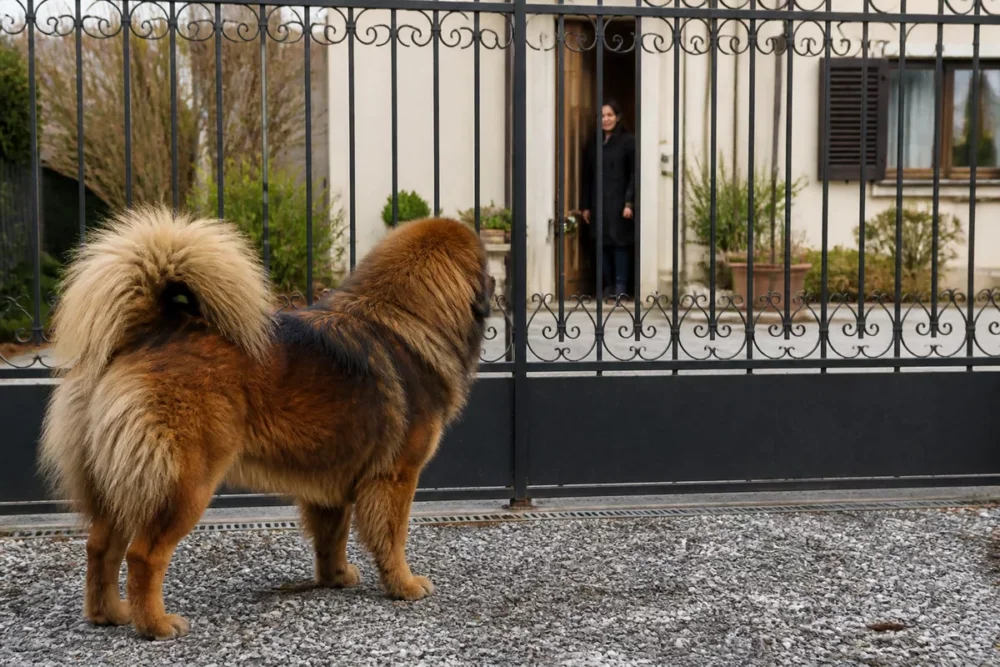
The Tibetan Mastiff can live in different environments if the home meets its needs for security, outings, human contact, and visitor management. A house with a garden makes organization easier but does not guarantee good adaptation. An apartment adds constraints related to noise, access, elevators, and neighbors.
House, garden or apartment: housing alone is not enough
A secure garden allows the dog to observe and move around, but it does not replace walks, exploration, or interactions with the family. Permanent outdoor living can reinforce isolation, excessive monitoring, and barking, especially when the dog is exposed to many triggers.
Living in an apartment is not automatically impossible, but it requires demanding organization. The owner must check access, elevator capacity, neighborhood tolerance, sound insulation, and visitor management. A Tibetan Mastiff in an apartment must also be able to go outside without turning every landing into a guard zone.
Exercise, stimulation, and managing solitude
Activity needs evolve according to age, growth, health, temperature, and physical condition. Regular walks, olfactory exploration, and calm activities are generally more suitable than intensive training or repetitive efforts, especially in young dogs.
Solitude is built gradually in a predictable environment. Long absences, frequent changes, and nights spent guarding alone can promote behavioral difficulties. Managing visual and auditory triggers should be part of the daily organization.
The Tibetan Mastiff can be compared to other giant dogs, but each alternative has its own constraints. A Leonberger is often sought for a different family temperament, a Pyrenean Mountain Dog retains a strong guarding function, while a Great Dane presents a different activity and coat profile. The choice should be based on real temperament, health, and lifestyle, not just size.
How to train a Tibetan Mastiff without reinforcing mistrust?
Training the Tibetan Mastiff begins with gradual socialization, consistent rules, and appropriate rewards. Sessions should remain short and understandable. Coercive methods, intimidation, and confrontations can increase fear or mistrust in an already reserved dog.
With a Tibetan Mastiff, consistency must replace brutality: a clear and repeated rule is better than a power struggle.
The owner must teach the puppy to cooperate for care, to come back in secure contexts, to walk on a leash, and to calm down when someone arrives. Recall can remain limited in open environments if the dog is very autonomous: off-leash outings should therefore be reserved for truly secure places.
Socialize the puppy at its own pace
Socialization involves gradually introducing people, balanced dogs, noises, transportation, handling, and various places. Too intense exposure can produce the opposite effect of what is intended. Signs of stress, fatigue, or avoidance should lead to reducing the difficulty.
- Start with calm and easily interruptible situations.
- Associate new experiences with positive ones.
- Avoid forced contact with strangers or agitated dogs.
- Gradually accustom the puppy to brushing, care, and transportation.
Priority learning in daily life
- Establish a calm-down area on a mat or in a defined zone.
- Teach leash walking without letting the dog manage encounters alone.
- Work on recall in an enclosed space or with an appropriate long line.
- Teach giving up, cooperation during care, and resource management.
- Set up a predictable protocol for welcoming visitors.
A threatening reaction, significant fear, or a bite requires professional advice. A competent trainer or behaviorist can observe the dog and propose appropriate support without applying a personalized protocol remotely.
Maintenance, feeding, and routine care of the Tibetan Mastiff
The Tibetan Mastiff’s grooming requires time, especially during shedding periods. The double coat must be brushed according to its density, the season, and the dog’s condition. Brushing also helps to spot knots, persistent moisture, parasites, or skin irritation.
Brushing and shedding: a constraint to anticipate
The ears, eyes, teeth, claws, and paw pads must be regularly checked. Grooming equipment should be chosen according to the length and density of the hair. A groomer can help when the undercoat forms knots that are difficult to remove without injuring the skin.
Hair loss can be significant in some individuals during seasonal shedding. People sensitive to hair or with limited availability for maintenance should consider this constraint before adoption.
Nutrition and growth control
The diet must be adapted to the age, giant size, activity, and body condition. An excessive ration can promote too rapid growth or overweight. The appropriate amount depends on the product used and the dog: it should be reassessed with a veterinarian.
Weight, movement, and silhouette must be monitored during growth. Supplements intended for joints or growth should not be given without professional indication.
Health of the Tibetan Mastiff: prevention and points of vigilance
The health of the Tibetan Mastiff should be approached as a matter of prevention and not as a list of diagnoses. Giant dogs may have locomotor constraints related to growth, weight, surfaces, and exertion. Dysplasia is among the disorders to watch for, without allowing to affirm that an individual is affected or that a specific risk applies to the entire breed.
Any sudden change in general condition, severe pain, breathing difficulty, abnormally swollen belly, repeated vomiting, or inability to move justifies immediate veterinary contact. A general article cannot distinguish an emergency from a less serious problem.
Joints, growth, and weight
Stiffness, limping, difficulty getting up, or an unusual decrease in activity must be evaluated by a veterinarian. In puppies, repeated jumping, frequent stairs, and intense exercises should be limited according to the recommendations of the professional following the animal.
Preventive consultations allow checking vaccination, parasites, teeth, growth, and body condition. The schedule depends on age, lifestyle, region, and history.
Emergencies and preventive follow-up
In case of intense pain, marked lethargy, worrying digestive disorders, or rapid behavioral change, the owner must contact a veterinarian or veterinary emergency service without delay. No human medication should be administered to an animal without professional advice.
Health documents of breeders can provide useful information, but they do not guarantee the future absence of disease. The Order of Veterinarians, veterinary schools, and recognized health organizations are more appropriate references than commercial promises for medical questions.
What price and budget to plan for a Tibetan Mastiff?
The price of a Tibetan Mastiff depends on the country, breeding, lineage, identification, documents, socialization, and available health follow-ups. No single rate can be presented as official for 2026 without consulting ads and identifiable professionals at the time of the project.
The actual budget also includes food, sturdy accessories, bedding, transport, grooming, preventive care, boarding, and a reserve for unforeseen events. The maintenance cost of a giant dog is not limited to the price paid at transfer.
Purchase or adoption price: which elements to compare?
A high price alone does not prove the quality of a breeding, and a very low price may hide incomplete documents, insufficient socialization, or concerning living conditions. It is necessary to check the identification, the conditions of transfer, information about the parents, and the support offered.
A numerical estimate found on an old page or in an advertisement does not constitute a current rate. To establish a budget, request several quotes or written estimates: monthly food, possible insurance, grooming, equipment, and veterinary consultation. The final amounts vary depending on the region, age, product, and health condition.
Monthly expenses and exceptional fees
A provisional budget can be organized into four categories: food, veterinary prevention, maintenance, and emergency reserve. The reserve must take into account the size of the dog, as transport, certain equipment, and care may cost more than for a small-sized dog.
- Food ration and possible formula changes.
- Vaccination, antiparasitics, and preventive consultations.
- Brushing, grooming, bedding, leash, and transport equipment.
- Care, boarding, behavior, and unexpected treatments.
How to choose a responsible breeder or adoption?
Choosing a Tibetan Mastiff responsibly means visiting the premises, observing the dogs, and checking the documents before any reservation. The professional must accept questions about temperament, health, socialization, and departure conditions. Pressure to pay quickly is a warning sign.
Questions to Ask Before Reserving a Puppy
Ask how the puppy was socialized, what handling it is accustomed to, how it reacts to visitors, and the environment in which it was raised. Information about the parents should be concrete: observed temperament, known history, available documents, and follow-up proposed after departure.
- Visit the premises and ask to see the adult dogs when possible.
- Request identification, vaccination, and transfer documents.
- Verify the available information on the health of the breeders.
- Describe precisely their housing, experience, and daily organization.
- Plan a meeting with a veterinarian or a training professional.
Warning Signs Not to Ignore
A seller who refuses visits, avoids questions, or promises a guaranteed temperament does not provide a sufficiently transparent framework. Advertisements focused solely on the color, size, or appearance of the puppy should be viewed with caution.
- Permanent availability of puppies without clear explanation.
- Incomplete documents or inability to verify identification.
- Pressure to quickly pay a deposit.
- Claims that the dog will necessarily be docile with everyone.
- Crossbreeds or origins announced without verifiable documents.
Associations may also offer adult Tibetan Mastiffs or dogs from crossbreeds. Adoption then requires evaluating known behavior, history, compatibility with the household, and transition conditions. Meeting several adults is often more informative than making a decision based on a photograph.
Key Takeaways
- 🐕 The Tibetan Mastiff is independent, territorial, and protective, without being automatically aggressive.
- 🏠 A secured garden does not replace human presence, outings, and socialization.
- 🎓 Early, consistent, and non-coercive training limits management errors.
- 🩺 Growth, weight, locomotion, and emergencies must be monitored with a veterinarian.
- 💶 The budget includes purchase or adoption, routine maintenance, and a reserve for unforeseen expenses.
Frequently Asked Questions
Is the Tibetan Mastiff aggressive?
The Tibetan Mastiff is generally described as protective, territorial, and reserved towards strangers. Reservation does not automatically mean aggression, as behavior also depends on socialization, genetics, environment, and supervision.
Can the Tibetan Mastiff live in an apartment?
Apartment living can be considered in some cases, but it requires rigorous organization. The owner must manage noise, visitors, outings, the elevator, neighbors, and solitude, while respecting the dog’s need for human contact.
Is the Tibetan Mastiff suitable for a family with children?
Cohabitation depends on the dog’s temperament, the children’s ages, and adult supervision. A young child should never be left alone with a dog, and interactions must respect the animal’s rest times, meals, and space.
Does the Tibetan Mastiff shed a lot?
The Tibetan Mastiff has a dense coat and may experience significant shedding periods. The amount of hair varies depending on the individual and the season, but regular brushing and skin monitoring are necessary.
Is the Tibetan Mastiff suitable as a first dog?
The breed is rarely the simplest choice for a first canine experience. Its size, independence, territoriality, and visitor management require serious preparation, professional support, and great availability.
What is the price of a Tibetan Mastiff and how much does its maintenance cost?
The price varies depending on the country, breeder, documents, lineage, health, and socialization. The maintenance budget includes food, care, grooming, equipment, transport, and unforeseen expenses; an updated local estimate should be requested before committing.
What size and weight does an adult Tibetan Mastiff reach?
The Tibetan Mastiff is a giant dog whose size and weight vary according to sex, lineage, and morphology. The figures announced by sources may differ; the official standard and the actual body condition should be prioritized rather than a high weight goal.
How to train a Tibetan Mastiff puppy?
Training is based on gradual socialization, consistent rules, and appropriate rewards. The priority learning areas include calmness, leash training, reliable recall, handling, resource management, and welcoming visitors, all without coercive methods.